
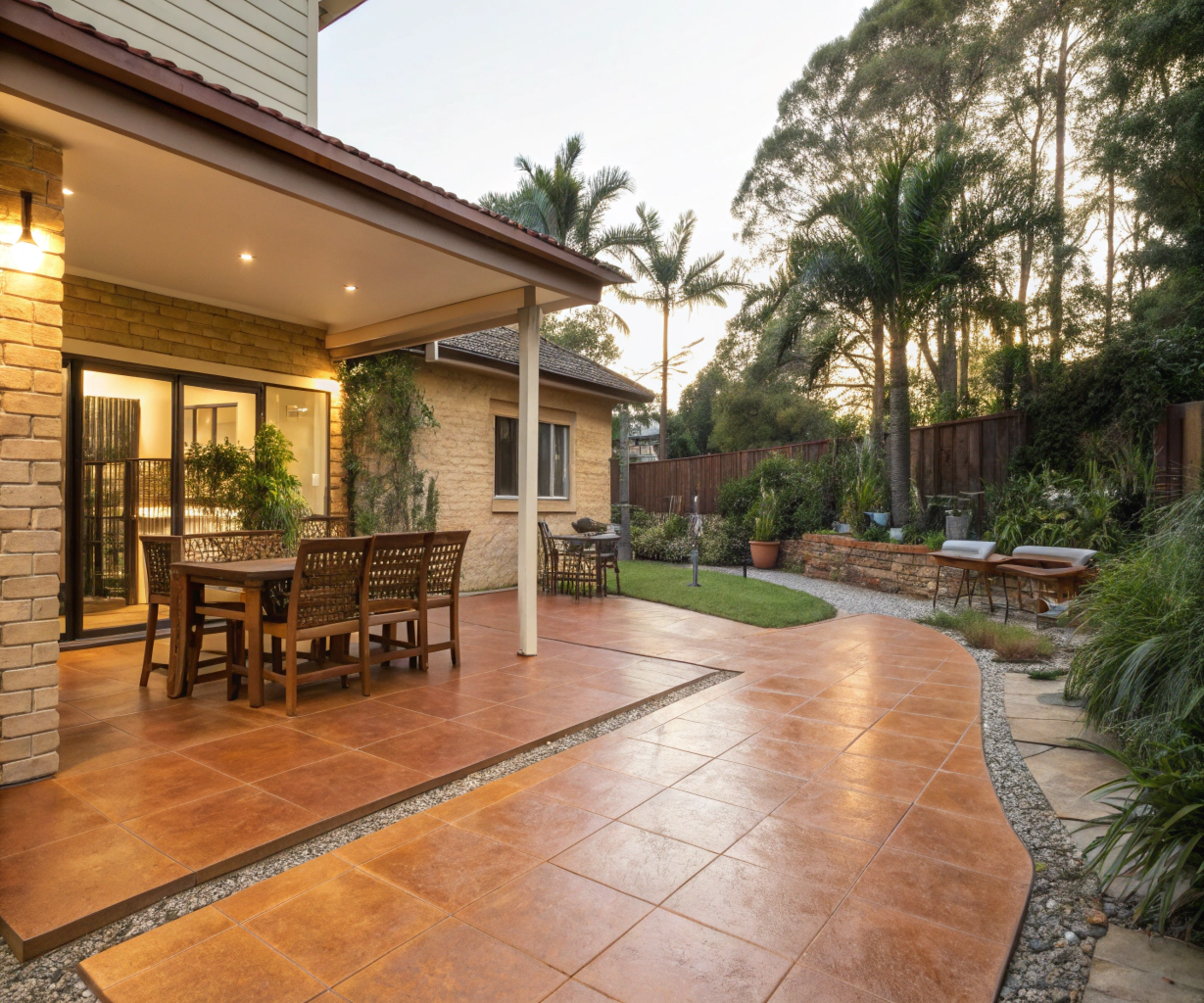
What Is Coloured Concrete and How Does It Work?
Coloured concrete is a standard concrete mix that has colour added — either through the batch itself or applied to the surface during the finishing process. The result is a slab that holds its colour as a permanent part of the material rather than a coating that sits on top and eventually peels or fades away.
There are two main methods used in residential and commercial applications. Integral colour involves adding oxide pigments directly into the concrete batch before it’s poured, distributing colour through the full depth of the slab. Surface-applied colour hardener is broadcast across the fresh concrete after the pour and trowelled into the surface, producing a more intense colour reading and a harder-wearing finish layer.
Both methods use iron oxide pigments as the colouring agent — compounds that are stable under UV exposure and resistant to the fading that affects synthetic alternatives in the intense subtropical sunlight the Tweed Heads region receives year-round. The choice between methods comes down to your specific project, the finish you’re after, and how the slab will be used.

Combining Coloured Concrete with Other Decorative Finishes
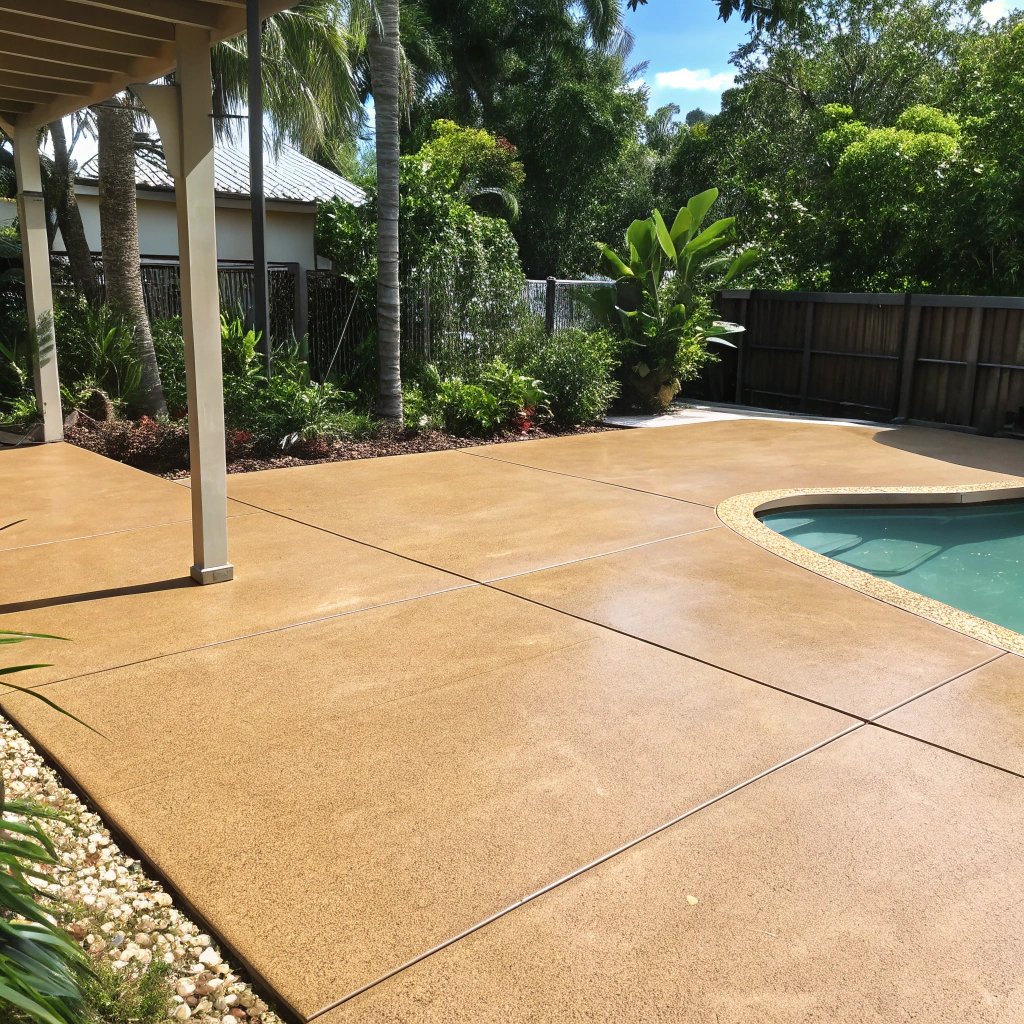
Coloured concrete works particularly well when paired with other decorative concrete techniques, and some of the best results we deliver across Tweed Heads properties come from these combinations. A coloured base with an exposed aggregate finish gives you surface texture and visual depth simultaneously — the colour reads through the aggregate and ties the whole surface together without competing with the stone. A coloured slab with a broom or trowel finish lets the colour carry the visual weight of the surface cleanly, with the finish adding slip resistance or sheen without introducing a second design element that pulls attention.
Coloured concrete with a stencilled or pattern finish is another option suited to entertaining areas and patios where homeowners want something closer to a paved aesthetic without the long-term maintenance that comes with it. Each combination produces a different visual outcome, and the right pairing depends on where the slab sits, how it’s used, and what the surrounding property looks like. We advise on these combinations as part of every coloured concrete quote.
Colour Consistency, Fading, and Sealing in the Tweed Heads Environment
Colour consistency across a large slab pour is a technical challenge that rewards experience. Variations in water content, trowelling pressure, curing conditions, and concrete batch timing can all produce colour variation in the finished surface if not carefully managed from the first pour to the last trowel pass.
The subtropical climate of the Tweed region places real demands on colour retention in outdoor concrete surfaces. High UV exposure, humidity, and the temperature swings that come with the wet and dry seasons all work on an unsealed coloured concrete surface over time — accelerating fade and breaking down the surface layer faster than you’d see in a cooler, drier climate.
That’s why UV-stable concrete sealer applied after curing is a standard part of every coloured concrete installation we complete — not an optional extra the homeowner needs to request separately. We use quality oxide pigment products selected for their UV stability, manage the pour process carefully to achieve a consistent colour result across the full slab, and seal the finished surface to protect that result for the long term. Kingscliff, Casuarina, Coolangatta, and Chinderah properties all sit in the same demanding coastal environment — and every job gets treated accordingly.
Colour Selection for Coastal and Subtropical Homes
Colour selection is where the project becomes personal, and the regional context of Tweed Heads gives homeowners a genuinely strong starting point. The coastal and subtropical residential aesthetic that defines this area tends toward warm neutral tones — sandy buffs, terracotta-adjacent ochres, warm greys, and charcoal tones that sit comfortably alongside the timber, rendered masonry, and Colorbond cladding common across local homes in Banora Point, Tweed Heads South, Chinderah, and Kingscliff.
These tones work because they reference what’s already here — the sand, the river, the weathered timber of older coastal homes, the warm stone tones of newer rendered builds. A coloured concrete finish chosen with that context in mind tends to feel like a natural extension of the property rather than an addition that competes with it.
We make colour samples and project references available before you commit, so you can see exactly how a chosen colour reads in real outdoor conditions rather than deciding on a small chip card.
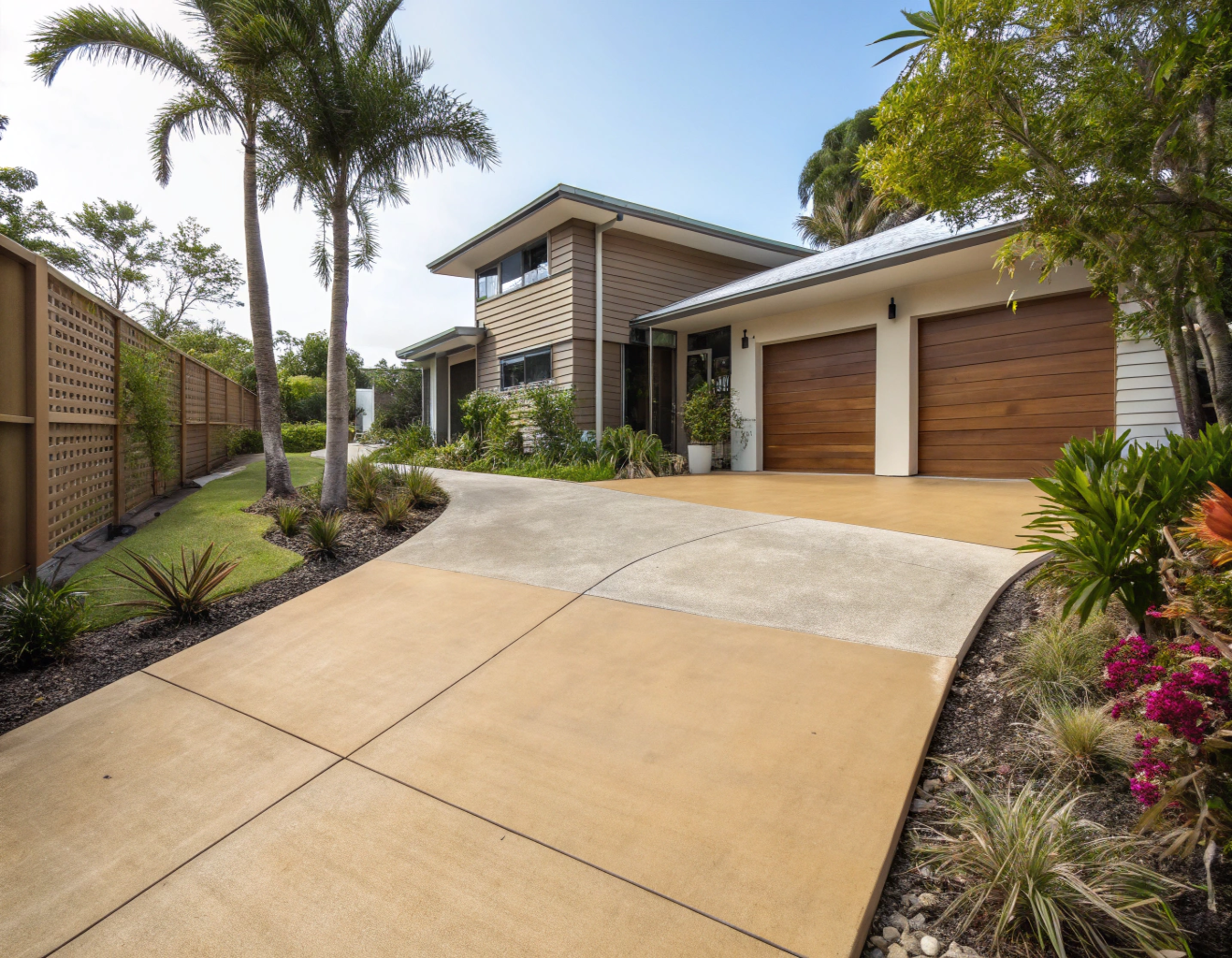
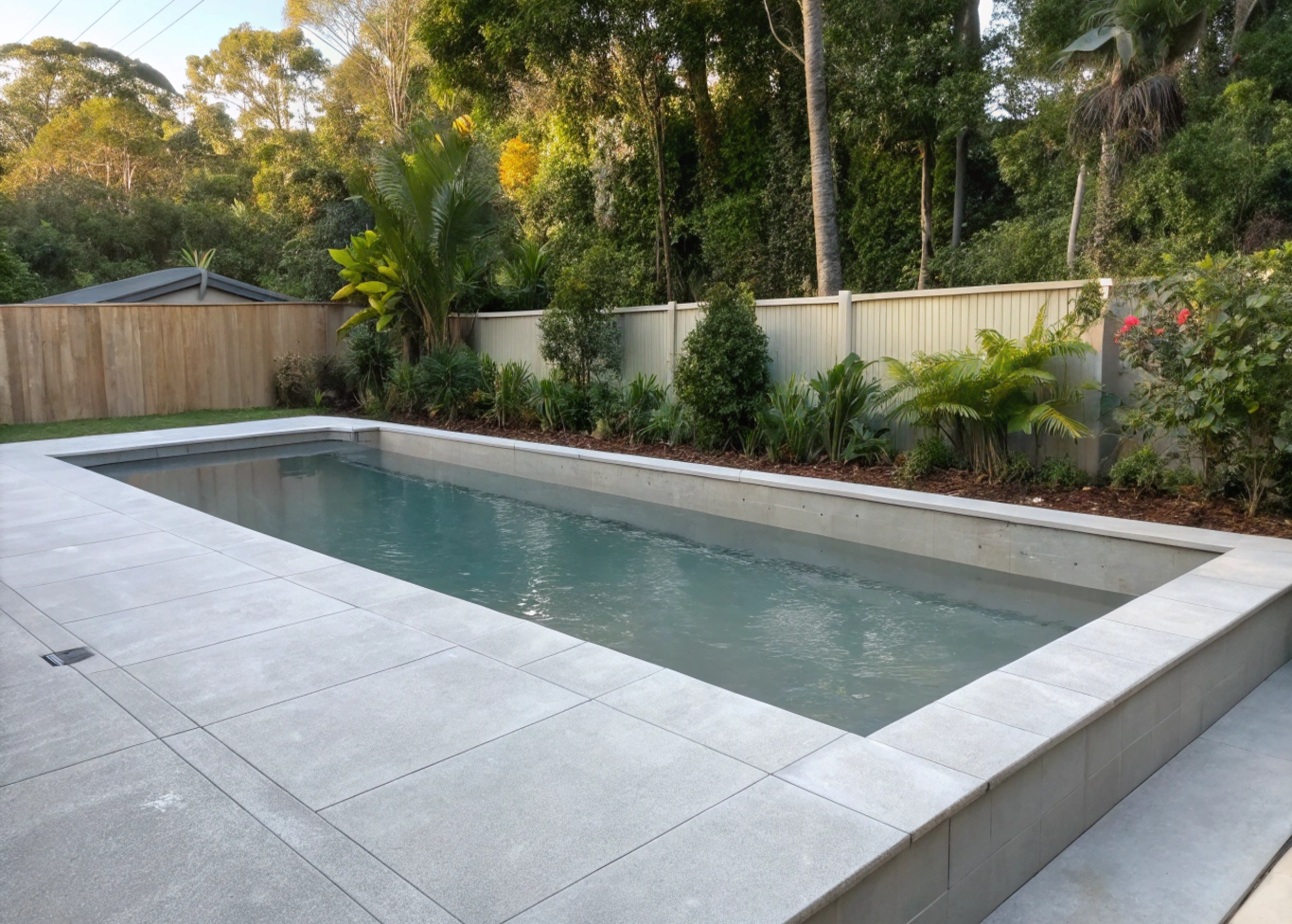
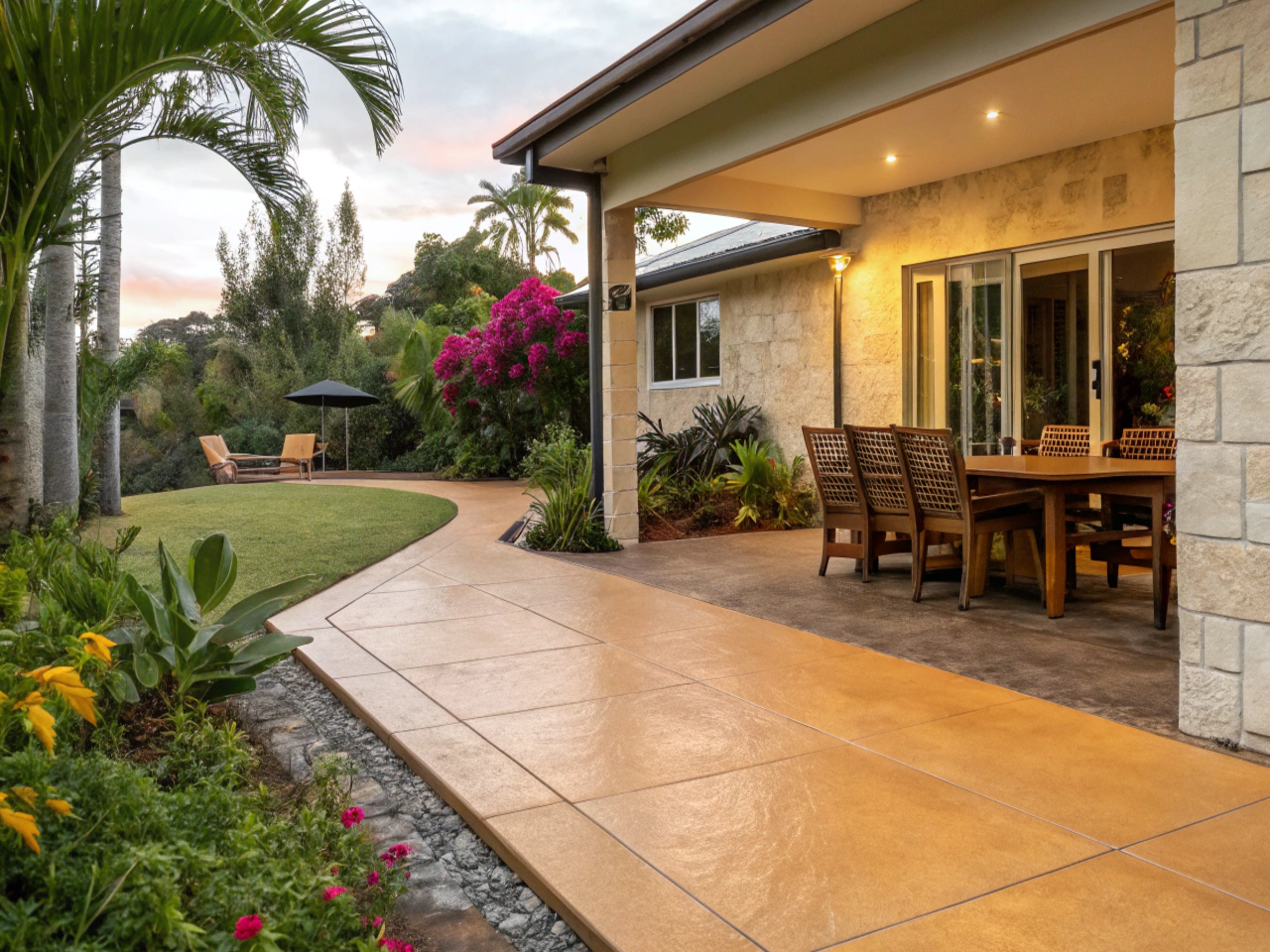
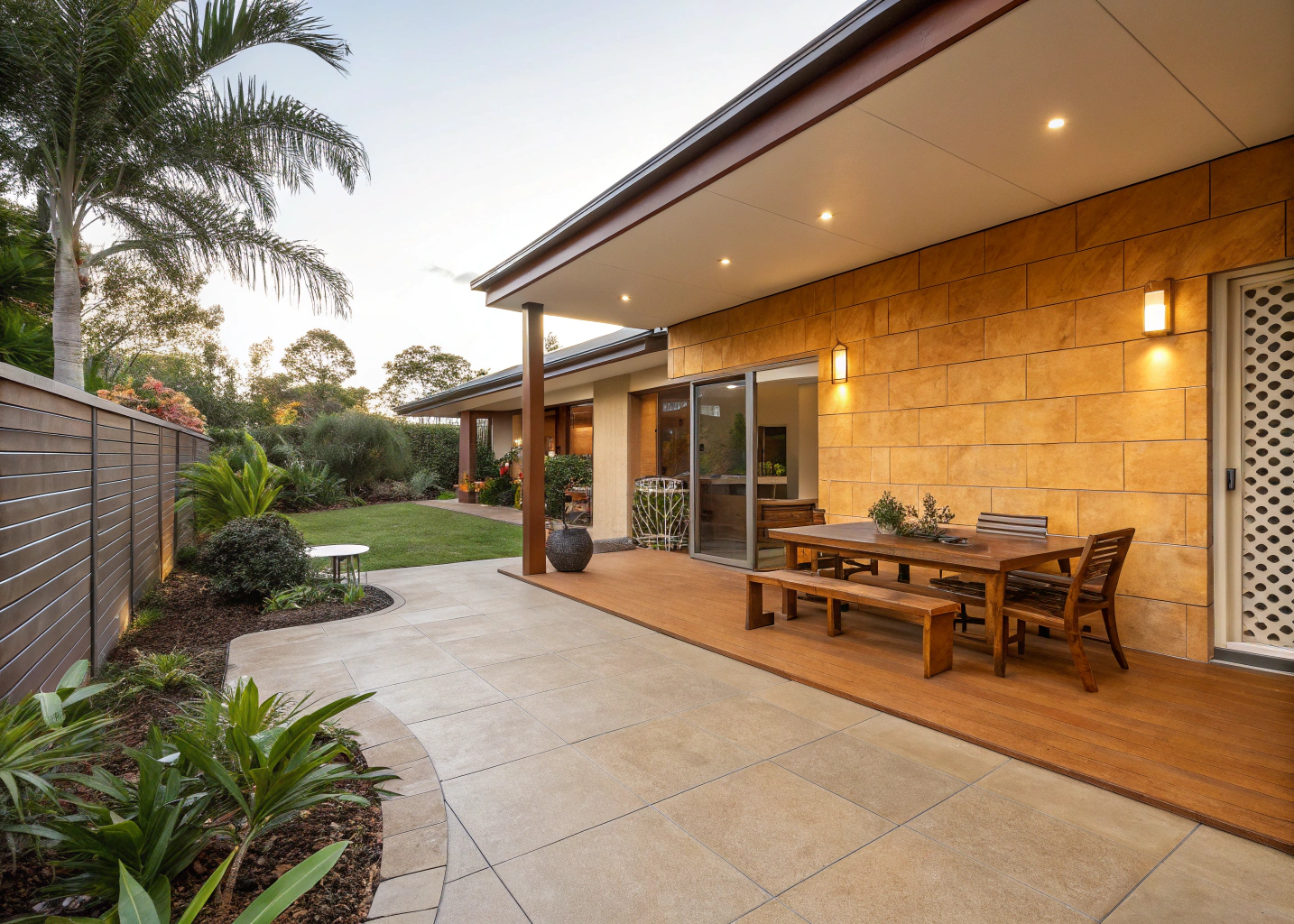
Integral Colour vs Colour Hardener – Which One Is Right for Your Project?
| Integral Colour | Colour Hardener |
|---|---|
| Integral colour involves oxide pigment mixed directly through the entire concrete batch before the pour. The colour runs through the full depth of the slab, so chips, surface wear, or future grinding don’t expose a contrasting grey beneath. It produces a softer, more natural colour reading across the surface — well suited to residential driveways, pathways, and entertaining slabs where a consistent, understated finish is the goal. A reliable choice for large pours where colour uniformity across the whole slab is the priority. | Surface-applied colour hardener is broadcast onto the fresh concrete after the pour and trowelled into the surface layer. It delivers a more intense, saturated colour reading than integral methods and simultaneously increases surface hardness — making it a strong performer in high-traffic applications like driveways and commercial slabs. The trade-off is that colour sits in the surface layer rather than running through the full depth, so heavy surface damage can expose the base concrete beneath. Best suited to projects where surface durability and colour intensity are both priorities. |
Oxide Pigments and Why They Perform in the Tweed Coast Climate
Oxide pigments — specifically iron oxide compounds — are the colouring agents used in quality coloured concrete installations, and their performance characteristics make them the right choice for the coastal subtropical conditions that Tweed Heads properties deal with year-round.
The core advantage of iron oxide pigments over synthetic alternatives is UV stability. Synthetic pigments can deliver vivid colour at installation but break down under sustained UV exposure, producing uneven fade across the slab surface within a few years. Iron oxide compounds don’t behave that way — their colour stability under UV is a material property rather than a surface treatment, meaning the pigment holds its tone through prolonged sun exposure without the uneven bleaching that makes a coloured slab look tired and patchy.
The Tweed Coast environment adds further demands beyond UV — salt air, high humidity, and the repeated wet-dry cycling of the subtropical seasons, all of which work on outdoor concrete surfaces continuously. Oxide pigments are chemically stable in these conditions, resistant to the moisture ingress and salt exposure that degrade synthetic colour compounds over time. Combined with a quality UV-stable sealer, an oxide-pigmented coloured concrete surface is built to hold its visual quality in this environment for the long term.
How We Manage the Pour Process for a Consistent Colour Result
Getting coloured concrete to read consistently across the full surface of a slab comes down to process discipline at every stage of the pour. Colour variation in finished concrete is almost always a process problem — inconsistent water ratios, uneven trowelling pressure, or batching delays that allow the mix to behave differently across sections of the same pour. We manage each of these variables deliberately on every job.
The steps we follow on every coloured concrete installation across Tweed Heads and surrounding suburbs:
- Consistent water-to-cement ratio maintained across every batch — excess water in the mix is one of the most common causes of colour washout and surface variation
- Pigment dosing is checked per batch to confirm colour consistency before each pour stage begins
- Trowelling technique and timing were managed across the full slab surface to avoid pressure variation that produces light and dark patches in the finished colour.
- Curing conditions are monitored, and curing compounds are applied where required to prevent rapid moisture loss that affects both colour and surface strength.
- Sealer is applied after full curing to lock in colour and protect the surface from UV degradation and moisture ingress.
Every one of these steps matters. Skipping or rushing any of them is where colour results fall short of what the homeowner expected.
Frequently Asked Questions
A properly installed and sealed coloured concrete surface will perform reliably for decades in the Tweed Coast environment. Quality oxide pigments and a UV-stable sealer applied after curing are the two factors that most directly determine how well the colour holds over time.
Integral colour runs pigment through the full depth of the slab. Colour hardener is applied to the surface after the pour and delivers a more intense colour with increased surface hardness. The right choice depends on your application and the finish you’re after.
Oxide pigments are UV stable by nature — they hold their tone under sustained sun exposure without the uneven bleaching that affects synthetic colour alternatives. A quality UV-stable sealer applied after curing adds a further layer of protection against fade in the Tweed Heads environment.
Yes — combining a coloured base with an exposed aggregate finish or a broom or trowel finish is a popular choice across Tweed Heads properties. Each combination produces a different visual result, and we advise on the right pairing for your specific project and property.
Colour consistency comes down to process discipline — managing water-to-cement ratios, pigment dosing per batch, trowelling technique, and curing conditions across the full pour. Variation in any of these is where colour results become uneven in the finished surface.
Get a Free Coloured Concrete Quote in Tweed Heads
Coloured concrete is one of the most rewarding upgrades you can make to a Tweed Heads property — and we make the process straightforward from the first conversation through to the finished and sealed surface. We’re licensed and insured, we bring colour samples and local project references to every measure and quote, and we service the full residential catchment, including Banora Point, Tweed Heads South, Coolangatta, Chinderah, Kingscliff, and Casuarina.
Your free quote includes a colour consultation — so you’re not making a decision off a chip card. Call us today or fill in the quote form,m and we’ll get back to you promptly to arrange a time that works.
