
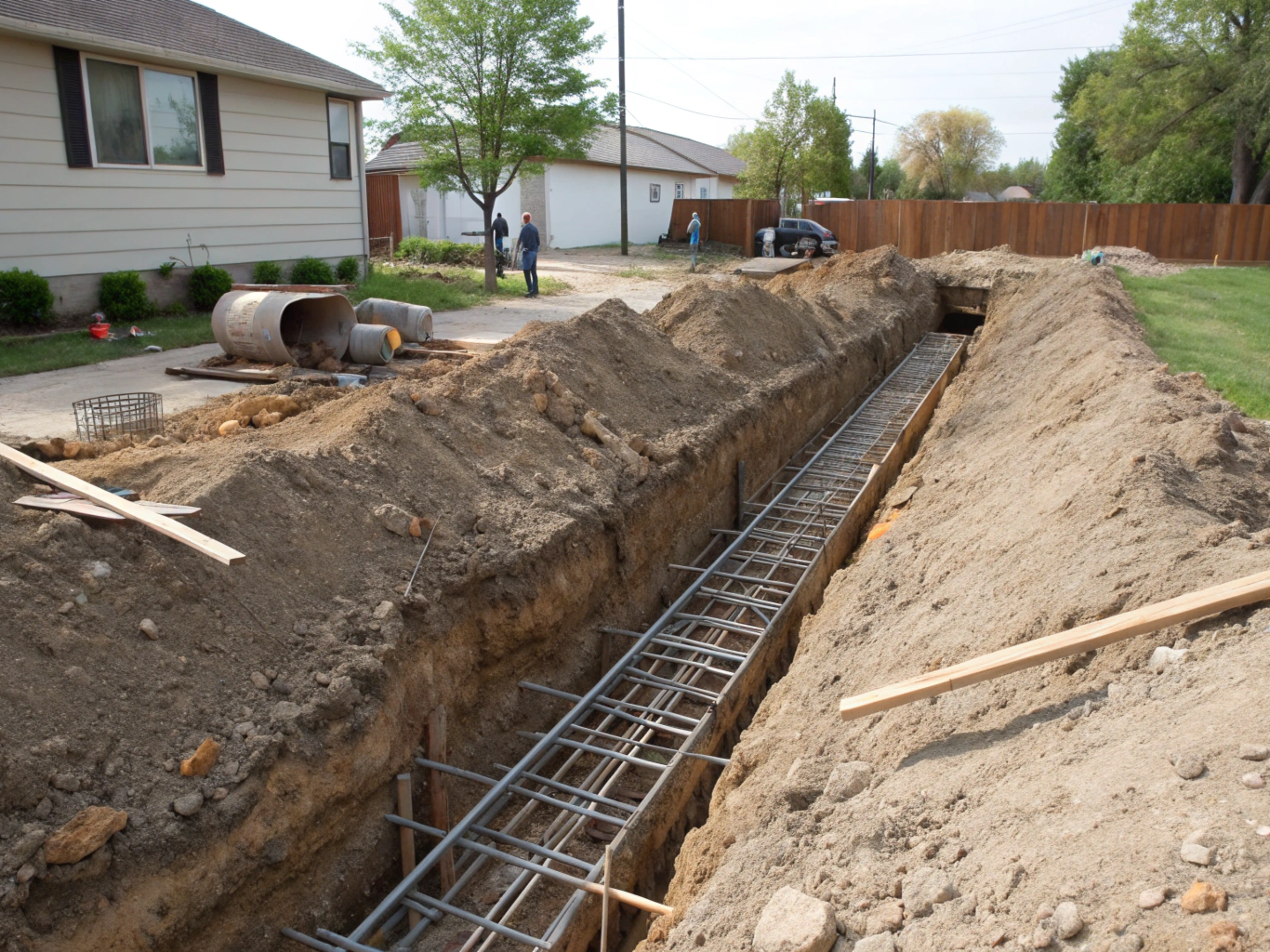
What Are Strip Footings and Why Are They Used in Residential Construction
Strip footings are continuous concrete beams cast directly beneath load-bearing walls, running the full length of those walls to transfer the weight of the structure above into the ground below. Unlike isolated pad footings, which carry load at discrete points, a strip footing spreads that load across a distributed bearing area — reducing the pressure applied to any single section of soil and delivering a far more stable foundation platform for wall construction above.
The geometry is straightforward: a strip footing is wider than the wall it supports and deep enough to bear on undisturbed, competent soil below the active zone where moisture and root activity cause ground movement. Width, depth, and reinforcement are all specified by a structural engineer based on the wall loads, soil classification, and the relevant building code for the site.
In the Tweed Heads residential market, strip footings are specified for almost every project involving load-bearing masonry or timber wall construction — new homes, granny flats, extensions, and light commercial builds all depend on correctly constructed strip footings as their structural base.

Strip Footing Construction in Tweed Heads — How We Work
Every strip footing project starts with the approved building plans. We set out footing positions and dimensions directly from the structural documentation, establishing correct locations on site before a single cut is made. From there, excavation proceeds to the specified depth and width as drawn, not approximate, not close enough. Once the excavation is open, we assess the base to confirm adequate bearing on undisturbed material before proceeding. In the Tweed area, where soil profiles can change across a single site, that base assessment is a genuine step in the process, not a formality. Where the excavation profile requires it, formwork is placed to contain the pour and hold the footing geometry to specification.
With the excavation confirmed and formwork set, reinforcement bars are placed according to the specified layout, bar size, and concrete cover dimensions drawn in the structural engineering documentation. Concrete mix is then selected to meet the structural classification and the local environment, accounting for the subtropical moisture exposure and reactive soil conditions that are part of every Tweed Heads project.
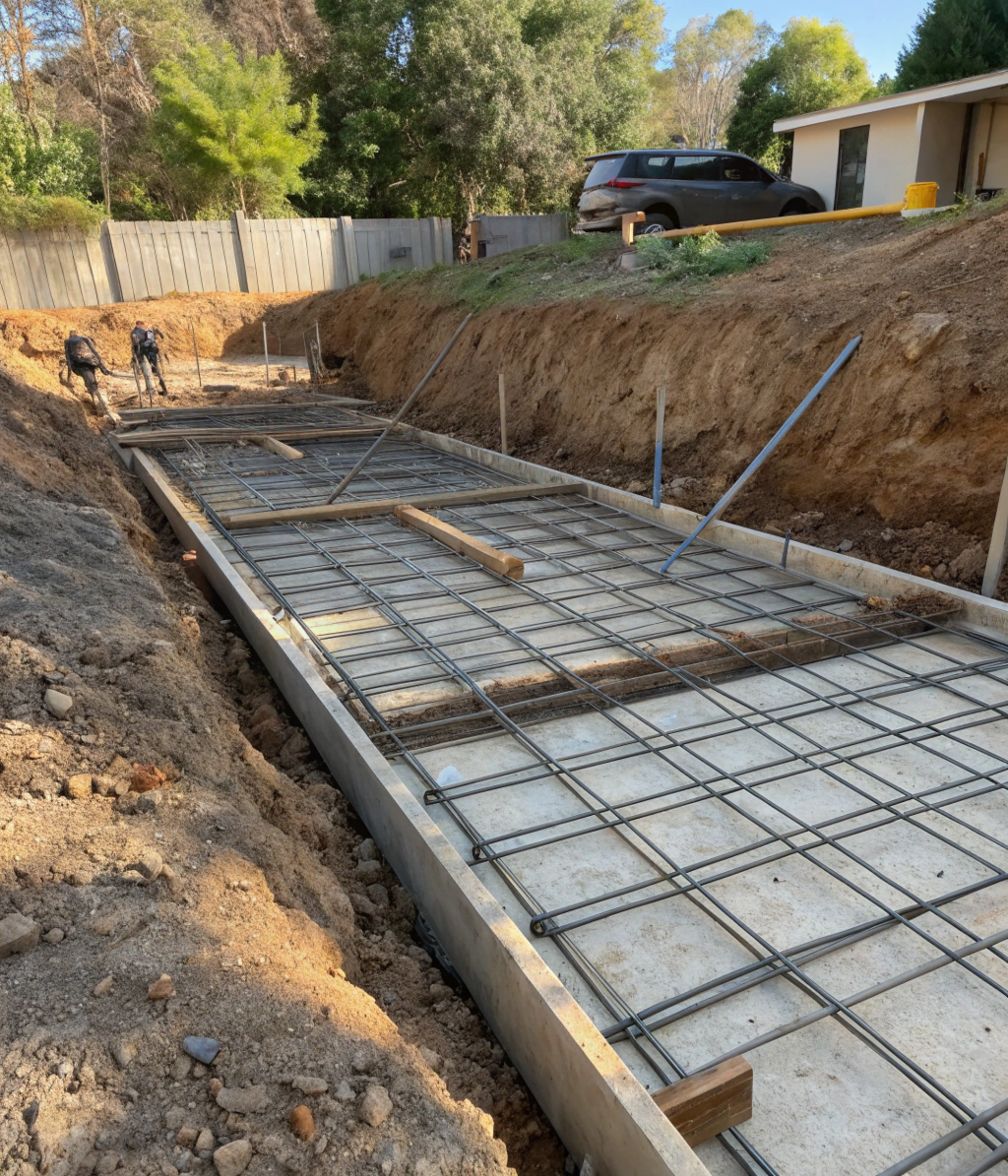
Step Footings for Sloped Sites in the Tweed Region
Step footings are the standard solution for sloped sites where excavating to a uniform depth across the full footing run would either over-excavate the high end or leave the low end bearing on inadequate material. Rather than chasing a flat base across uneven terrain, a step footing drops the footing profile down the gradient in increments — each step maintaining the specified bearing depth into competent soil while following the natural fall of the land.
Across the Tweed Heads region, sloped blocks are common. Banora Point, Terranora, and the hilly corridors running back from the coast all produce sites where step footing construction is the only practical way to achieve compliant bearing depth without excavating volumes of material that serve no structural purpose. The step dimensions — horizontal run and vertical rise — are specified in the structural drawings and must be held accurately, because step geometry that drifts from specification affects wall construction above and can create differential settlement risk if bearing depth is compromised at any point along the run. We set out and construct step footings directly from the engineering documentation, holding step positions and dimensions through the excavation and pour stages to deliver a footing profile that matches what the structural engineer specified for the site.
Combined Strip Footing and Slab Edge Beam Systems
Many residential projects across Tweed Heads don’t carry a strip footing and floor slab as two completely separate elements — they combine them into an integrated system where the slab edge beam and the strip footing beneath load-bearing walls are formed and poured as a single continuous concrete element. This combined approach is common in waffle pod and conventional slab construction across the local residential market, and it demands precise coordination between the footing geometry and the slab layout above.
Getting a combined system right means the edge beam dimensions, reinforcement layout, and bearing depth all need to satisfy both the footing specification and the slab engineering simultaneously. Where these requirements intersect — at corners, junctions, and penetrations — the formwork and reinforcement placement needs to be accurate from the outset, because errors in a combined system affect both the footing performance and the slab edge integrity above it. We work from the full structural documentation on combined footing and slab projects, coordinating the footing construction with the broader slab program to keep the build moving without hold-ups at the inspection stage. Across Tweed Heads and the surrounding region, this is one of the most common footing configurations we encounter — and one of the most important to get right the first time.
Site Set-Out, Excavation and Base Preparation
| Site Set-Out | Excavation | Base Preparation and Assessment |
|---|---|---|
| Footing positions are established directly from approved structural drawings before any machine touches the ground. Offset profiles and stringlines confirm wall centrelines and footing edges, dimensions are checked against engineering specifications, and any discrepancies between site conditions and the approved documentation are identified and resolved before excavation begins. | Excavation proceeds to the specified depth and width as documented in the structural drawings — held to tolerance, not approximated. Clean, consistent cuts avoid over-excavation that compromises bearing depth. On sloped sites, stepped excavation profiles are used where a uniform base level cannot be achieved across the full footing run. Spoil is managed away from open trench edges throughout. | The excavation base is inspected to confirm undisturbed, competent bearing material before reinforcement is placed. Across the reactive and variable soil profiles common throughout Tweed Heads, this is a genuine process step. Soft spots, disturbed material, or unexpected fill are identified and addressed. Where subtropical rainfall creates saturation risk, drainage of the excavation is managed before the pour proceeds. |
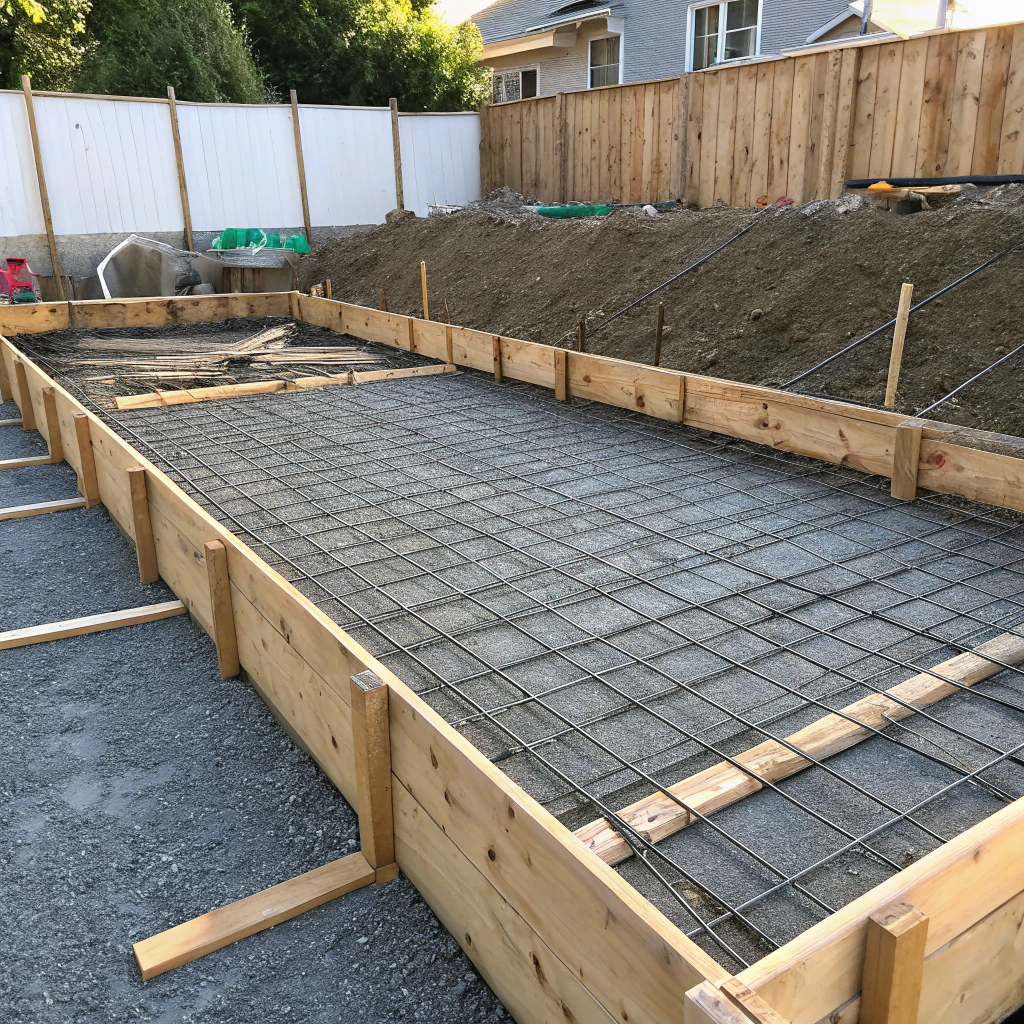
Reinforcement, Formwork and Concrete Specification
Reinforcement, formwork, and concrete specification are where a strip footing moves from a correctly positioned excavation to a structurally compliant concrete element. Each stage builds directly on the one before — and each one needs to be right before the next proceeds.
Reinforcement bar is placed to the specified layout, bar size, and concrete cover dimensions documented in the structural engineering drawings. Cover blocks are set to hold bar position through the pour, because reinforcement that shifts during placement loses the cover dimension the engineer specified and compromises long-term durability in the reactive soil and subtropical moisture environment common across Tweed Heads.
Formwork is placed where the excavation profile alone won’t contain the pour to the specified footing geometry — at stepped transitions, on loose or crumbly excavation faces, and wherever the concrete needs a positive boundary to hold its shape.
Concrete mix is selected to the specified strength grade and exposure classification for the site — accounting for the soil conditions, moisture exposure, and the relevant Australian Standard requirements that apply to the project under either the Queensland or New South Wales building framework.
Why Correct Set-Out at the Footing Stage Matters
Correct set-out at the strip footing stage is one of the most consequential decisions made on any construction project — and one of the easiest to get wrong when the pressure is on to move quickly. Errors in footing position that look minor in an open excavation translate directly into wall alignment problems that every trade above the slab inherits and has to work around.
A footing that’s out of position by even a small margin creates a cascade of compounding problems:
- Wall frames that don’t align with the structural layout as approved
- Door and window openings that fall outside their specified positions relative to the building envelope
- Brickwork and masonry that requires awkward cuts or non-standard detailing to accommodate the offset
- Wet area and drainage rough-ins that miss their intended positions relative to wall centrelines
- Certifier and building surveyor inspections that flag non-conformances requiring costly remediation before the build can proceed
We set out every strip footing project directly from the approved structural and architectural drawings, holding positions and dimensions to specification from the first profile to the last peg.
Frequently Asked Questions — Strip Footings Tweed Heads
A strip footing runs continuously beneath a load-bearing wall, distributing structural load across the full wall length. A pad footing carries the load at a single isolated point. Strip footings are the standard solution for wall construction across residential and light commercial projects.
Depth is specified by a structural engineer based on the site’s soil classification, wall loads, and building code requirements. In the Tweed region, reactive soil profiles often require deeper bearing to reach undisturbed, competent material below the active moisture zone.
Yes. Strip footing dimensions, reinforcement layout, and concrete specification must be documented by a licensed structural engineer as part of the building approval process. We work directly from that documentation and do not substitute engineering judgement with on-site estimation.
The Tweed area carries reactive and variable soil profiles that expand and contract with moisture changes. These conditions directly affect footing width, depth, and reinforcement requirements. A geotechnical report and soil classification inform the structural engineer’s footing specification for each site.
Yes. Sloped sites are handled using step footings, which drop the footing profile down the gradient in increments rather than excavating to a uniform depth across uneven terrain. Step geometry is specified in the structural drawings and held accurately through the excavation and pour.
Yes. Because Tweed Heads sits across the QLD/NSW border, we hold licensing under both frameworks and operate compliantly on either side of the state line. We coordinate with certifiers and building surveyors in both jurisdictions to keep strip footing inspections on schedule.
Strip Footing Contractors Serving Tweed Heads, Banora Point, Kingscliff and Beyond
Strip footing construction across Tweed Heads and the surrounding region means working compliantly under both Queensland and New South Wales licensing frameworks, building from structural engineering and approval documentation, and coordinating with certifiers and building surveyors on both sides of the border to keep inspections moving and programs on track. We hold the relevant licensing, we work to Australian Standards for residential and commercial footing construction, and we quote free of charge across our full service area.
We service Tweed Heads, Banora Point, Coolangatta, Chinderah, Kingscliff, Murwillumbah, and the broader Gold Coast border corridor. Whether you’re a licensed builder, an owner-builder working through your first project, or a developer with a program to protect, get in touch today for your free strip footing quote.
