
Concrete Slab Demolition Done Safely and Properly
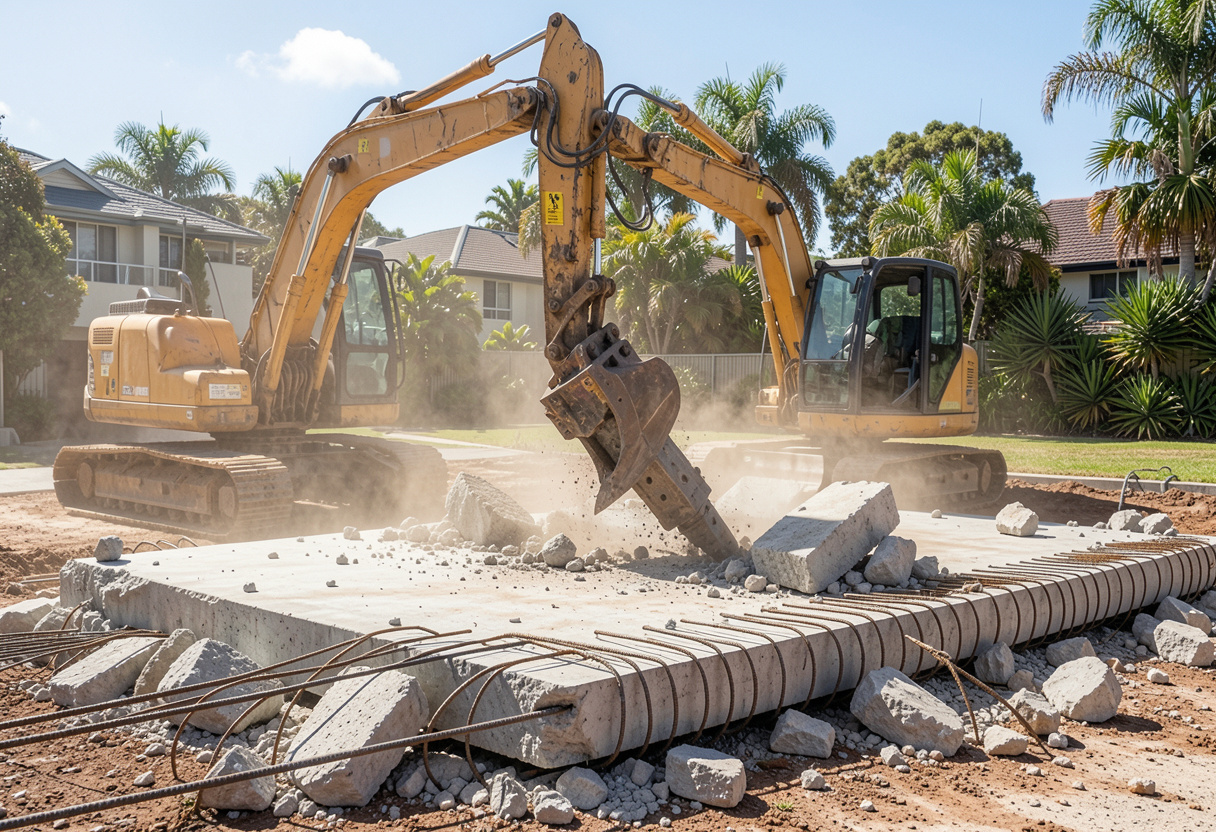
Talk to enough homeowners around Banora Point or Kingscliff and you’ll hear the same story — they hired someone cheap to break up the old slab, ended up with a severed water line, a cracked adjacent slab, and a renovation project that stalled for weeks. That’s not a rare horror story. That’s what happens when slab demolition gets treated like a simple smash-and-grab job rather than the technical, consequence-laden process it actually is.
Concrete slabs across the Tweed Heads region age hard. Salt air, subtropical heat, heavy wet season rainfall, and UV exposure all accelerate deterioration — and with a consistent stock of ageing residential and commercial slabs throughout the area, slab demolition demand here is real and ongoing. We’re the local team that approaches every removal safely, methodically, and with the next phase of your project already front of mind from the moment we arrive on site.

What Happens Before We Break a Single Thing
Partial Slab Demolition — The Job That Demands More Precision
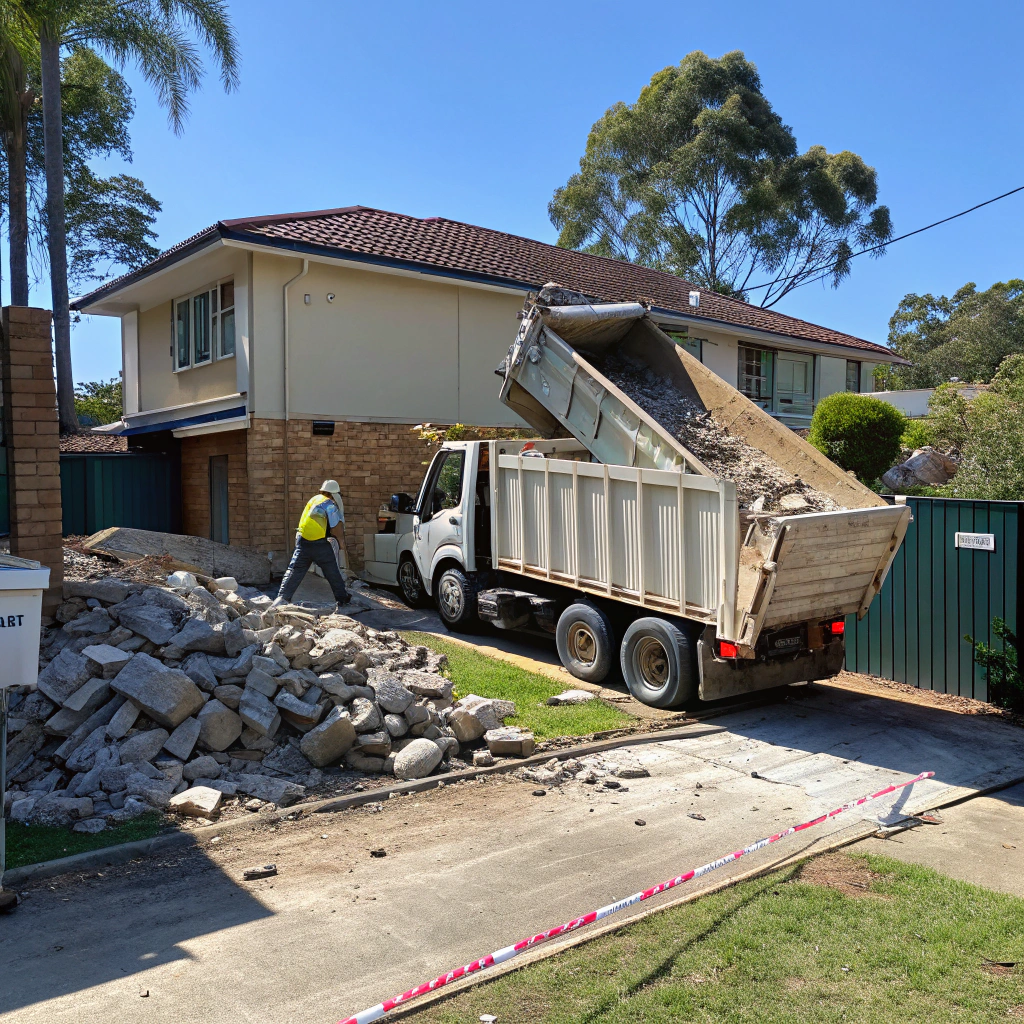
Slab Demolition Scenarios We Handle Across the Tweed Region
We provide professional slab demolition services for residential and commercial projects throughout the Tweed region. This includes complete house slab removal for knockdown rebuilds, garage and shed slab upgrades, commercial floor slab demolition for fitouts or refurbishments, and careful removal of outdoor entertaining slabs and patios. Each project is managed to leave the site clean, safe, and ready for the next stage of construction.
Pool surround slab demolition is another area of expertise, requiring precise saw cutting and controlled breaking to protect existing structures, equipment, and drainage systems. Across all scenarios, our focus is on efficiency, safety, and minimizing disruption, ensuring that every demolition is executed with care and professionalism.
Why Tweed Heads Homeowners and Builders Work With Us
When you’re managing a construction or renovation project, slab demolition needs to be the enabling step that clears the way for the next phase — not the stage that creates a week of problems you didn’t budget for.
We service slab demolition projects across Tweed Heads, Banora Point, Tweed Heads South, Coolangatta, Murwillumbah, Chinderah, and Kingscliff — the full residential and commercial catchment where renovation, rebuild, and redevelopment activity keeps consistent demand for professional slab removal work.
Ready to get your site cleared and your project moving? Get in touch today for your free site assessment and quote.
FAQs About Slab Demolition in Tweed Heads
How long does slab demolition take for a typical residential job in Tweed Heads?
Most standard residential slab demolitions around Banora Point and Tweed Heads South wrap up in a single day — sometimes two if the slab is large, heavily reinforced, or access is tricky. I always factor in time for debris removal and site cleanup, so you’re not left with a rubble pile when I leave. Older slabs from the 80s and 90s that have been sitting in our subtropical conditions are often more deteriorated than they look, which can actually speed the breaking process up. I’ll give you a realistic timeframe during the site assessment so you can plan your next trade accordingly.
Do I need a council permit to demolish a concrete slab in the Tweed Shire area?
For standalone slab demolition — a patio, garage floor, or shed slab — you generally don’t need a permit in the Tweed Shire Council area, but it depends on what’s connected to it and what you’re planning to build next. If the slab is part of a structure or attached to your home, the rules change and a development application may be required. I always recommend checking with Tweed Shire Council directly before work begins, and I’m happy to advise based on what I see on site. Getting this right upfront saves you from a much bigger headache down the track.
Will slab demolition damage my existing lawn, garden beds, or neighbouring concrete?
Done properly, the impact on surrounding areas should be minimal — but I won’t pretend there’s zero disruption involved. I use saw cutting to create clean separation lines where your slab meets garden edges, paths, or neighbouring concrete you want to keep. In tighter backyard jobs common across Kingscliff and Casuarina, I rely on hand-held equipment rather than heavy machinery to avoid tearing up lawns or compacting soil around established garden beds. A bit of prep work before I arrive — moving pots, garden furniture, and anything fragile — goes a long way toward protecting your yard.
My slab has tree roots growing under and through it — does that change how the demolition works?
Tree root intrusion is genuinely common in the Tweed Heads area — the subtropical climate means trees grow aggressively and concrete doesn’t stand much of a chance over time. It does change the approach slightly, because roots can displace and lift sections of slab in unpredictable ways that affect how the slab breaks. I take more care around root systems to avoid damaging significant roots if you’re keeping the tree, and I’ll flag any root situations I find during the site assessment. It’s manageable — just not something to go in blind about.
Can you remove just part of my slab without cracking what's left behind?
Yes, and it’s something I do regularly for renovation and extension projects across the Tweed region. The key is diamond saw cutting a precise line at the correct depth before any breaking starts — that’s what protects the section you’re keeping. I’ve seen plenty of jobs where a tradie went straight in with a jackhammer and ended up cracking well into the retained slab, which then needed replacing too. Done right, you’ll have a clean, solid edge ready for the new pour without touching what you wanted to keep.
How do you handle the concrete rubble and steel after demolition — does it just get left on site?
Nothing gets left behind — site cleanup and waste removal is part of the job, not an add-on. Concrete rubble gets loaded and taken to a facility where it can be crushed and recycled, and steel reinforcement is separated out for metal recycling rather than going straight to landfill. Given how much demolition and renovation work is happening across the Tweed Heads growth corridors right now, I think it matters that construction waste is handled responsibly. You’ll have a clear, clean site when I’m done — ready for whatever’s coming next.
