
How Thick Should a Garage Slab Be?
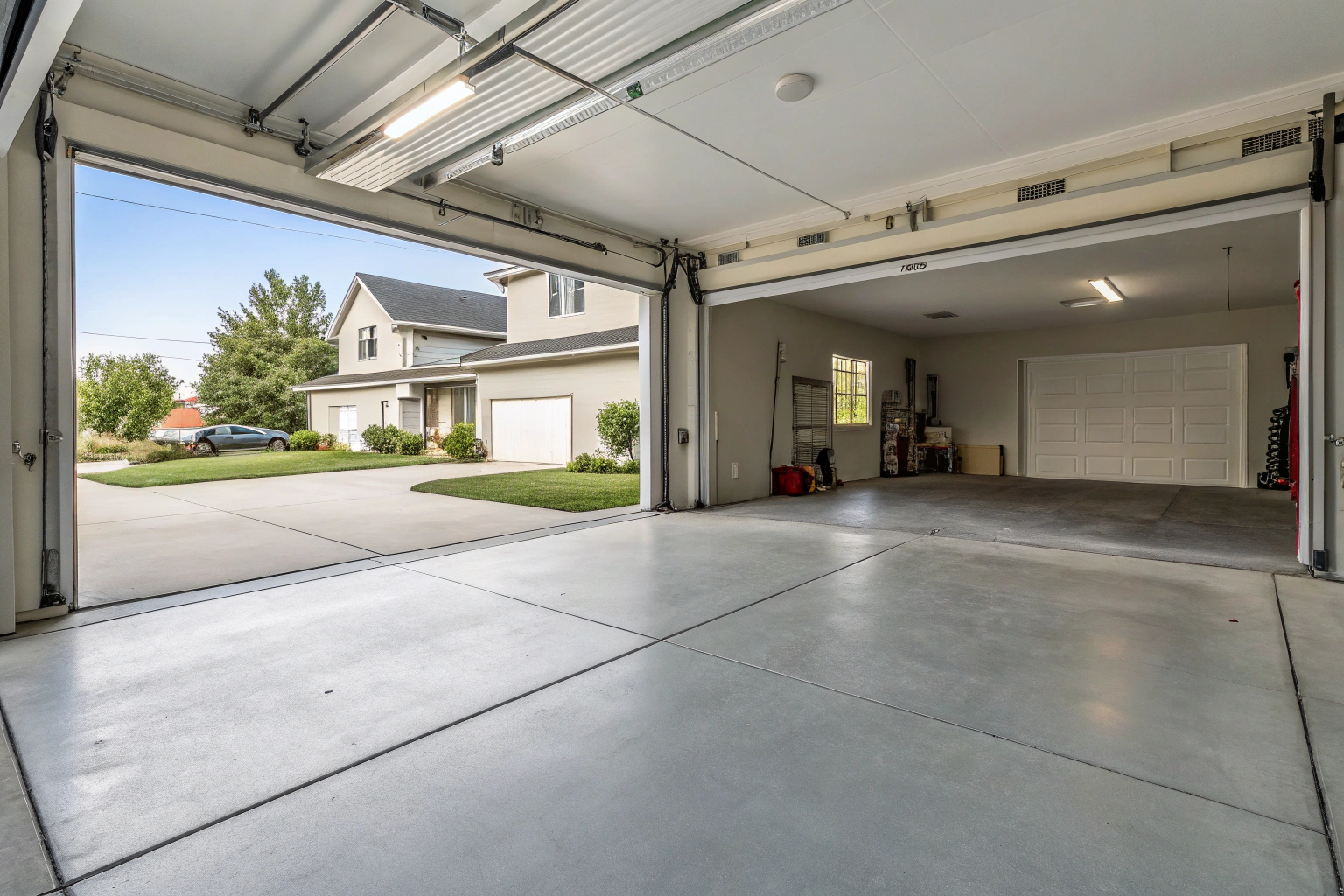
Garage slab thickness depends on the intended load and site conditions. In Tweed Heads, where subtropical rainfall and variable soils increase settlement risk, correct specification matters more than the national minimum:
| Specification | Requirement |
|---|---|
| 100mm (4 inches) | Minimum for a light single-car residential garage on a well-prepared subgrade |
| 125mm (5 inches) | Recommended for standard double garages and regular SUV or 4WD loading |
| 150mm (6 inches) | Required for heavier vehicles, trailers, workshop machinery, or where soil classification demands additional thickness |
| Thickened edge beams | 300mm+ depth at slab perimeter where garage wall frames transfer structural loads into the slab |
| Concrete strength | Minimum 25MPa for residential; 32MPa recommended for coastal and high-humidity environments like Tweed Heads |
| Reinforcement | SL72 or SL82 mesh as standard; engineer-specified bar reinforcement for heavier load applications |
Slab thickness should always be confirmed against your soil classification report and intended garage use — not defaulted to the minimum.

Why Garage Slabs Demand More Than a Standard Concrete Pour
Getting the specification right from the start is what separates a slab that performs for decades from one that starts showing problems within a few years.
Vehicle loading — static and dynamic demands on the slab: Parked SUVs and 4WDs place concentrated static load on the same spot for extended periods. Combined with repeated dynamic loading from vehicles driving in and out, a slab not specified for actual use will crack and deteriorate faster than expected.
Structural load transfer from the wall frames and the roof: In framed garage construction, wall frames and roof structure transfer load down into the slab perimeter. Thickened edge beams carry that weight — without adequate depth and reinforcement, the perimeter cracks or settles under sustained load from above.
How Tweed Heads soil and climate conditions raise the specification bar: Subtropical rainfall and wet-dry soil cycling cause reactive clays to expand and contract seasonally. That movement pressure, combined with coastal humidity, means garage slabs here need higher concrete strength, a correctly specified vapour barrier, and properly compacted subgrade.
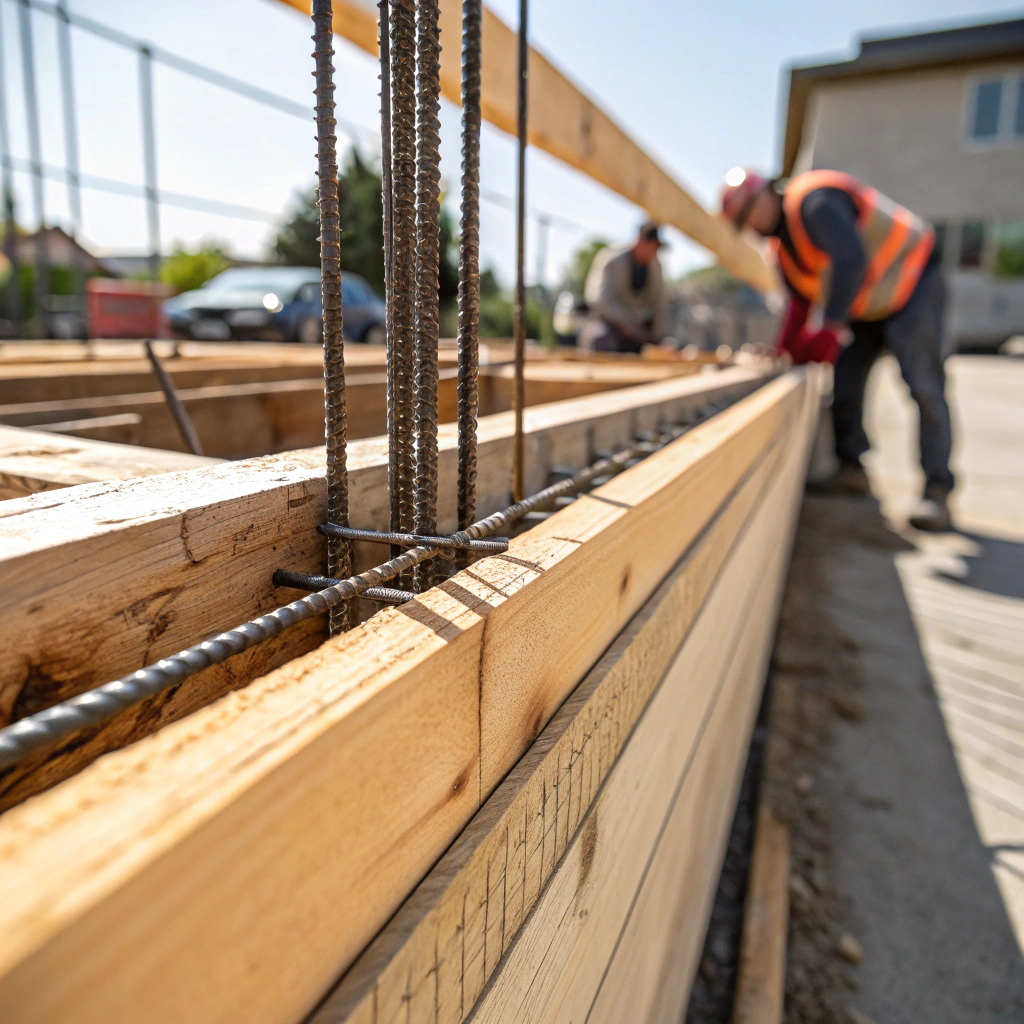
Site Preparation & Subgrade Work
What happens below the slab matters just as much as the concrete above it. Subgrade preparation is where long-term slab performance is won or lost.
Excavation depth and subgrade compaction: Excavation removes unstable topsoil and organic material down to a competent subgrade level. The exposed material is then compacted in layers to achieve the density needed to support the slab load without settlement or movement over time.
Vapour barrier specification for coastal and humid environments: Tweed Heads’ coastal humidity makes vapour barrier selection critical. A correctly specified and lapped polyethylene membrane stops ground moisture migrating up through the slab — protecting the concrete itself and any flooring, coating, or stored contents above it.
Why subbase preparation determines long-term slab performance: A well-compacted subbase distributes vehicle and structural loads evenly across the ground below. Skip this step or rush it, and even a correctly specified slab will crack and settle as the subgrade shifts — no matter how good the concrete mix is.
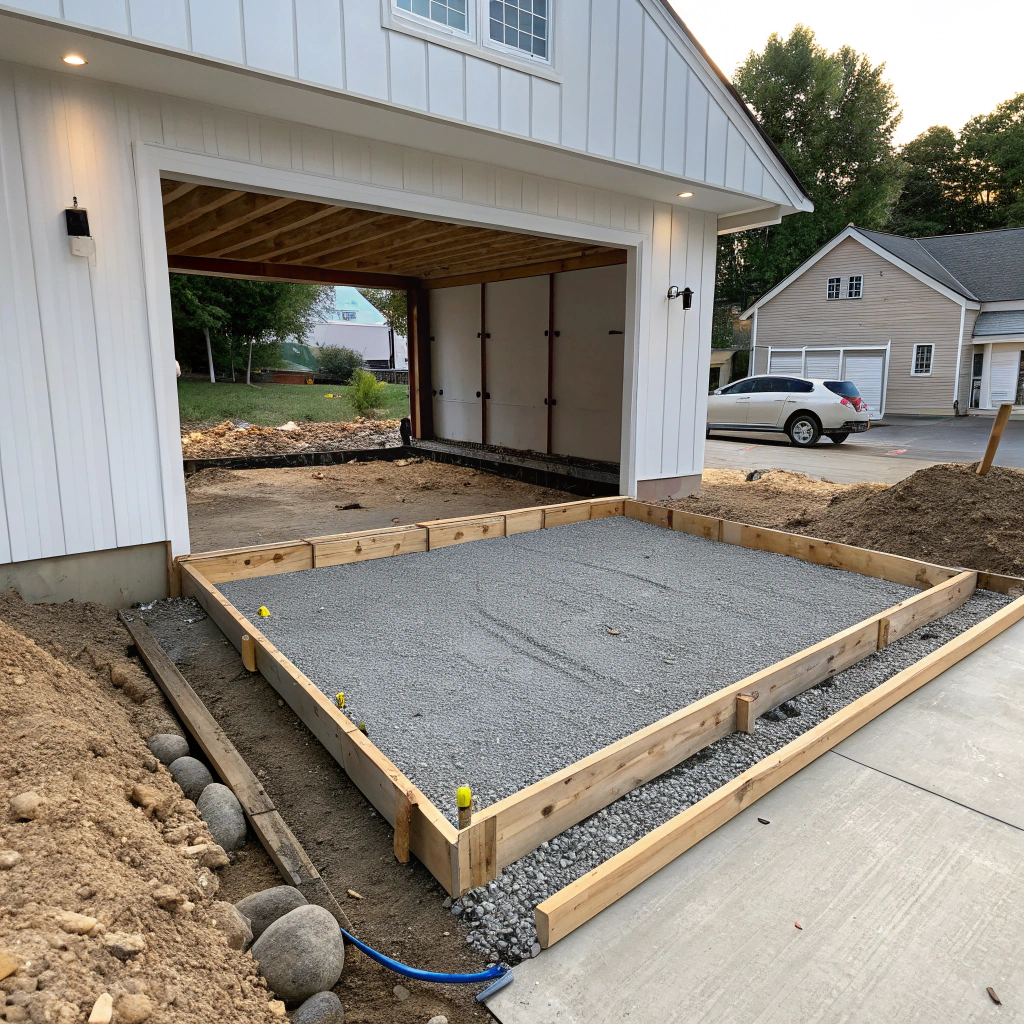
Structural Specification — Thickness, Reinforcement & Mix Design
Specification decisions made at the design stage determine how the slab performs under real load conditions for the life of the structure.
Slab thickness by use case: A single-car garage on a well-prepared subgrade starts at 100mm. Standard double garages with SUV or 4WD loading call for 125mm. Heavier vehicles, trailers, or workshop machinery push the requirement to 150mm or above, depending on soil classification.
Reinforcement selection — mesh vs engineered bar: SL72 or SL82 steel mesh is standard for residential garage slabs. Where loads are heavier, or soil conditions demand it, engineer-specified bar reinforcement replaces mesh — providing greater tensile strength and crack control across the full slab thickness.
Concrete mix strength for Tweed Heads conditions: Minimum 25MPa suits standard residential applications on stable subgrades. For Tweed Heads’ coastal and high-humidity environment, 32MPa is the more appropriate specification — delivering better durability, reduced permeability, and longer service life in conditions that accelerate concrete deterioration.
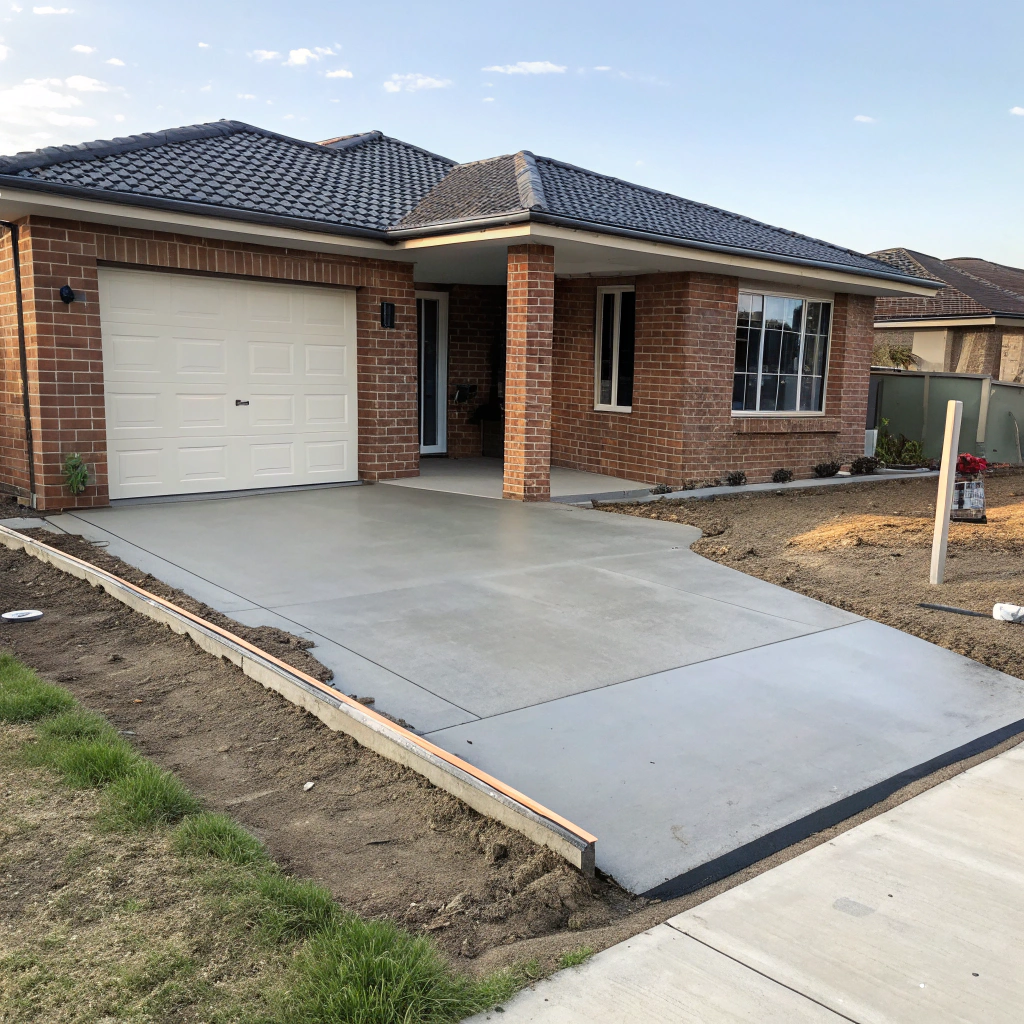
Formwork, Edge Profiles & Garage Door Thresholds
Formwork sets the shape, level, and edge detail of the slab — and getting these elements right at the forming stage avoids costly corrections later.
Correct formwork setup and edge beam forming: Formwork establishes the slab perimeter, controls finished floor level, and forms the thickened edge beams that carry structural loads. Accurately set and braced formwork holds its position through the pour — a form that moves mid-pour affects the entire slab geometry.
Threshold rebate detail to suit garage door systems: The garage door threshold requires a rebate or step detail formed into the slab edge before the pour. This detail is specific to the door system being installed — getting the depth and profile wrong at this stage means grinding or remediation work before the door can be fitted correctly.
Finished floor level coordination: The slab’s finished floor level needs to account for the driveway approach, any internal floor coverings, and drainage falling away from the garage interior. These relationships are set at the formwork stage — they can’t be adjusted once the concrete is placed and cured.
Surface Finish Options for Garage Floors
The right finish depends on how the space will be used — a working garage has different requirements to one used primarily for storage or as a home workshop.
Steel trowel finish
A steel trowel finish produces a smooth, dense surface ideal for garages where epoxy coatings or floor paint will be applied later. The tight surface reduces porosity and gives coatings a clean, consistent substrate to bond to.
Broom finish
A broom finish drags a stiff brush across the fresh concrete to create a textured surface. It’s the standard choice for garage floors where bare concrete will be left unsealed — providing grip underfoot and resistance to tyre scuffing from regular vehicle use.
Sealer and coating options
| Finish Option | Best For |
|---|---|
| Penetrating sealer | Bare concrete protection, low maintenance, retains natural appearance |
| Epoxy coating | High-use workshops, clean aesthetic, chemical and stain resistance |
| Anti-slip additive | Any garage with foot traffic, particularly in humid or wet conditions |
| Floor paint | Budget-conscious finish, easy to apply, suitable for light-use garages |
Coordinating Your Garage Slab With Builders & Existing Concrete
A garage slab rarely sits in isolation — coordinating with builders, certifiers, and existing concrete early avoids scheduling delays and level mismatches at handover.
On new builds, the finished floor level needs to be agreed with the builder beforehand — a slab poured to the wrong FFL creates problems for the door system, internal linings, and driveway connection.
Where a garage slab is being added to an existing property, the new slab needs to tie in correctly with the existing driveway and pathways — matching levels, managing the construction joint, and accounting for drainage fall across the finished surface.
In Tweed Shire, garage slab construction may require a hold point inspection before the pour. We coordinate directly with certifiers and builders to keep the project on schedule without cutting steps.
Garage Slab Services Across Tweed Heads & Surrounding Suburbs
We pour garage slabs across the Tweed region — from established residential streets in Banora Point and Tweed Heads South to new estate builds in Kingscliff and Casuarina, and properties through Chinderah, Tweed Heads West, and out toward Murwillumbah.
Every site is different. Soil conditions, access, existing concrete, and intended garage use all influence how we specify and build the slab. We assess each project on its own merits and provide a free measure and quote based on the actual conditions at your property.
We’re licensed and insured, work to Australian Standards, and carry local project experience that directly informs how we specify slabs for this climate and soil environment.
Frequently Asked Questions
Yes. In Tweed Heads’ coastal and humid environment, we always specify a vapour barrier. Without it, ground moisture migrates up through the slab and causes problems for coatings, flooring, and anything stored in the garage.
Most residential jobs — a driveway or single slab — are completed within a day. Larger or more complex demolition work may take two to three days, depending on site access, volume of material, and what the subbase needs to look like post-removal.
In most cases, yes. We recommend confirming approval requirements with Tweed Shire Council before work begins.
We advise avoiding heavy vehicle loading for the full 28-day cure period. The slab reaches workable strength at around seven days, but full structural strength takes longer.
Yes. We regularly tie new garage slabs into existing driveways and pathways — matching levels, managing construction joints, and accounting for drainage across the finished surface.
We typically specify 32MPa for garage slabs in the Tweed Heads area. The coastal humidity and subtropical conditions here accelerate concrete deterioration, so we go above the standard residential minimum for better long-term durability.
Yes. We work with builders to schedule the pour at the right stage — typically after frame layout is confirmed and before wall frames are erected — and we agree on finished floor levels with the builder beforehand.
Get a Free Quote on Your Garage Slab
Tell us about your project, and we’ll get back to you with a free measure and quote. No obligation, no pressure — just straightforward advice and accurate pricing based on your actual site.
- Licensed and insured
- Australian Standards compliant
- Local Tweed Heads experience
- Free measure and quote
Call us today or fill in the contact form and we’ll be in touch.
Serving Banora Point, Kingscliff, Chinderah, Tweed Heads South, Tweed Heads West, Coolangatta & surrounds.
