
Getting the Set-Out Right Before a Single Bucket of Dirt Moves
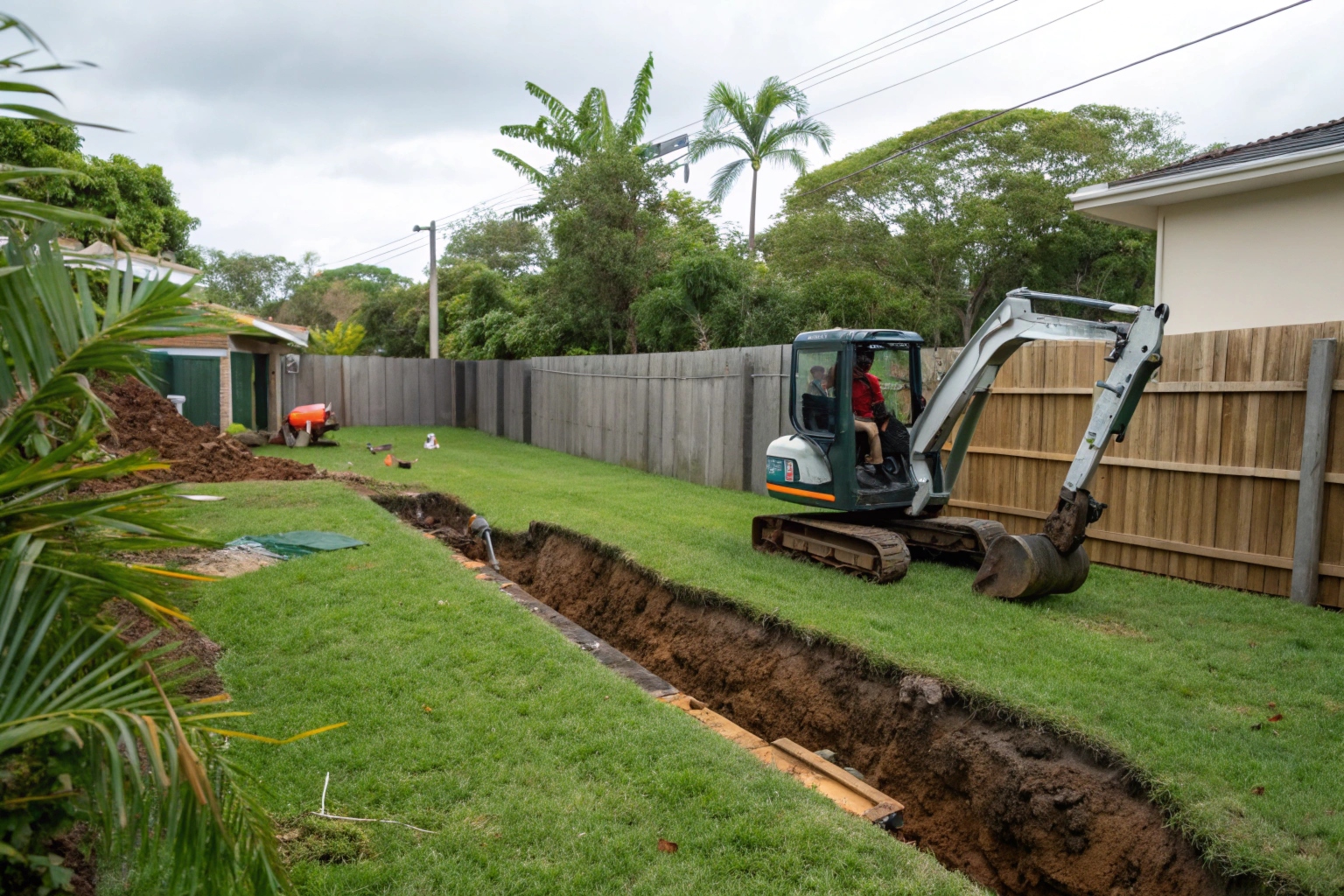
Foundation excavation starts long before the machine fires up. It starts with the paperwork — the site plan, foundation layout drawing, and structural engineering specification that define exactly where every footing sits, how wide it needs to be, and how deep it needs to go.
Translating those documents into physical pegs and profiles on the ground is the first real quality test on any foundation project. Get the set-out wrong by even a small margin and you don’t just have a mispositioned hole — you’ve got misaligned walls, columns, and structural elements that carry that error through every stage of the build above. Fixing a footing that’s already been poured in the wrong position is an expensive, program-wrecking exercise. Getting the set-out right the first time is what prevents it.
Pre-excavation service location is the other non-negotiable before physical work begins. Across the established residential and commercial areas of Tweed Heads, Banora Point, and Coolangatta, underground infrastructure is dense — water, sewer, stormwater, electrical, and telecommunications services running in directions that aren’t always where the original plans suggest. Foundation excavation that proceeds without proper service identification and marking carries a real service strike risk. We don’t take that shortcut. Every project gets proper pre-excavation service location before the machine moves.

How We Execute Foundation Excavation Across Every Site and Footing Type
Not every foundation excavation job looks the same, and the equipment and approach that works on a clear new-build block in Casuarina isn’t the right fit for a residential extension in an established Banora Point backyard with fencing, established gardens, and an existing structure sitting three metres away.
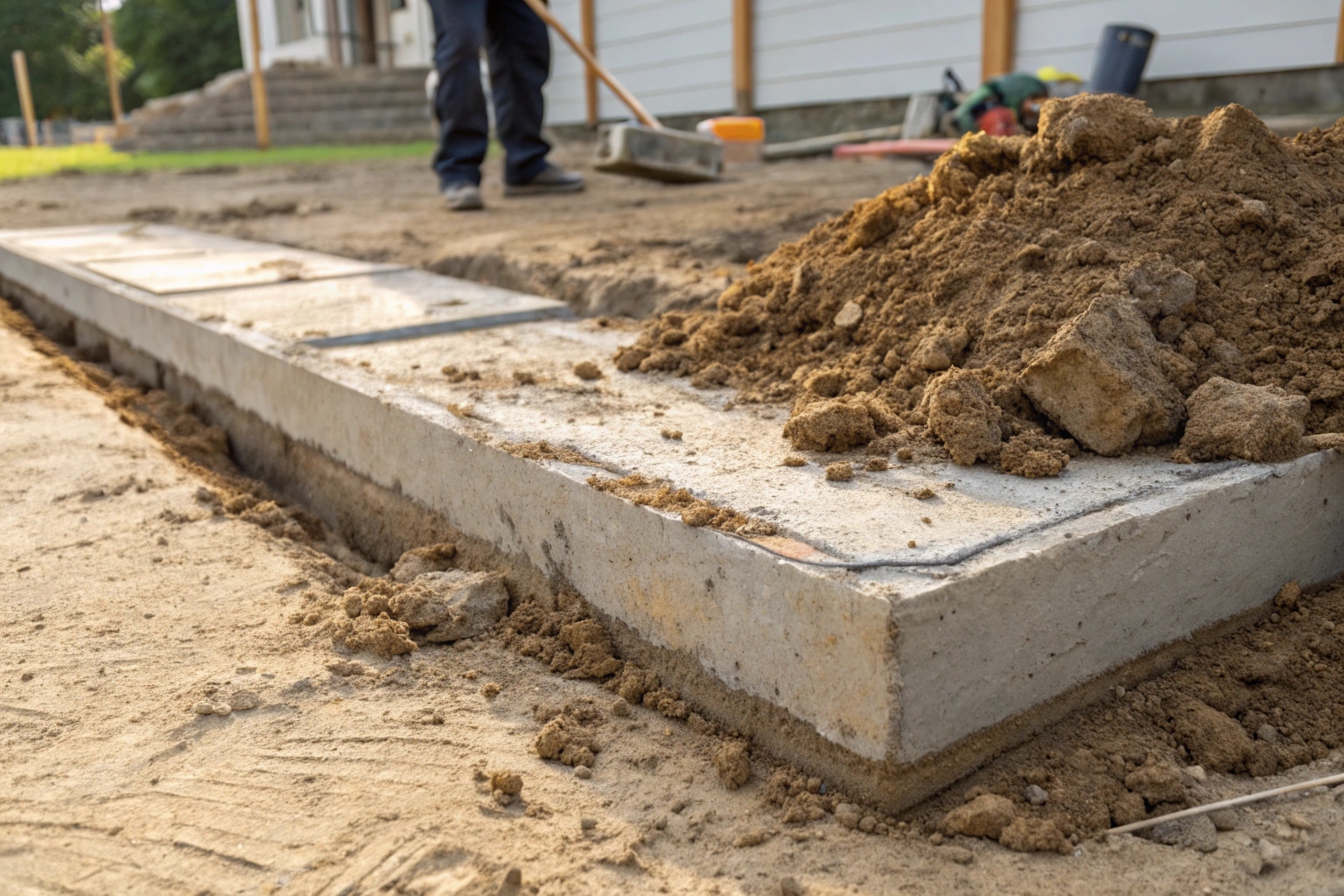
For restricted-access residential sites — extensions, renovations, and secondary structures across the older established suburbs of Tweed Heads, Banora Point, and Coolangatta — we deploy mini and compact excavators that can work within tight site constraints without damaging what’s already there. Once the mechanical excavation gets the bulk of the material out, footing bases and faces get hand trimmed to the clean, accurate bearing surfaces that certifier inspections require. That’s not an optional finishing step. It’s what gets a footing passed on the first inspection visit.
For new home construction and commercial foundation excavation where the footing extents and volumes justify it, larger equipment gets the job done more efficiently without sacrificing accuracy.
Throughout the entire dig, we’re continuously reading what’s coming out of the ground — monitoring changes in soil type, moisture, and bearing quality that tell us whether we’ve reached adequate founding material or whether conditions require going deeper to pass through unsuitable material and reach a competent bearing stratum. That’s the difference between foundation excavation and just digging holes.
Foundation Excavation Inspections — What Passes, What Doesn’t, and Why It Matters
Foundation excavations are an inspectable stage under the building approval process on both sides of the Tweed Heads Queensland-New South Wales border. Before reinforcement goes in and before a single cubic metre of concrete is poured, the certifier or building surveyor needs to get on site, inspect the excavated footings, and confirm they comply with the approved structural documentation.
That inspection is a program gate. Pass it first visit and the project keeps moving. Fail it and you’re looking at rectification work, a re-inspection booking, and a construction schedule that’s shifted out by days or weeks at the most time-sensitive stage of the build.
What determines whether a footing excavation passes on the first visit comes down to a few things that aren’t complicated but do require care and precision to achieve consistently:
• Correct dimensions — width and length matching the structural documentation exactly
• Clean trimmed bearing surfaces — no loose material, no slumped faces, no disturbed base
• Accurate positioning — set-out verified against the approved foundation layout
• Free of water — base dewatered and stable before the inspection proceeds
• Correct founding depth — confirmed in adequate bearing material, not just at the specified nominal depth
We prepare every foundation excavation to an inspection-ready standard and coordinate inspection timing directly with certifiers and building surveyors operating under both QLD and NSW building approval frameworks to keep your construction program on track.
Sloped Blocks and Step Footing Excavation Across the Tweed Region
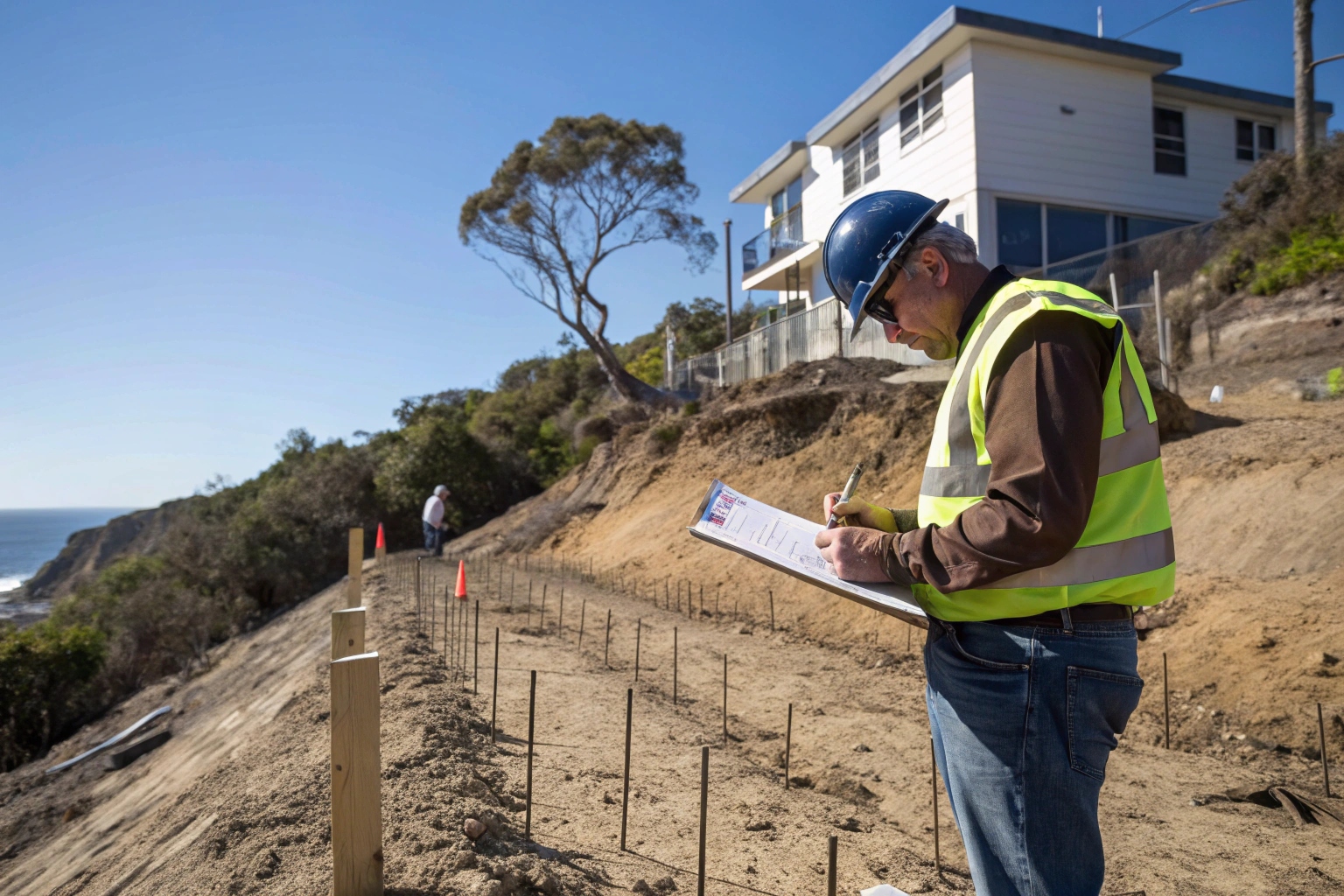
A flat building block in Tweed Heads is the exception, not the rule. A significant proportion of residential lots across the broader region involve meaningful topographic variation — from gently sloping established suburb blocks in Banora Point and Coolangatta through to more significantly graded hillside sites in elevated areas further inland. Foundation excavation on these sites is a different exercise entirely from working on a level platform.
On sloped sites, footings can’t simply be excavated to a uniform depth across the building footprint. Step footing excavation follows the ground slope in increments — each step maintaining the minimum founding depth below natural surface while managing the differential cut depths that accumulate across the full extent of the foundation layout. Get the step dimensions or riser heights wrong and you’re not compliant with the structural documentation, regardless of how clean the excavation looks.
The other consideration on steeper sites is cut face stability. During the foundation construction period — from the point the excavation is open through to the concrete pour and backfill — exposed cut faces on steeper ground need to be appropriately battered or shored to protect both the excavation itself and any adjacent structures, fencing, or site infrastructure nearby.
We handle step footing excavation with the same precision set-out and continuous ground assessment that we bring to every foundation excavation job across the Tweed Heads construction market, regardless of how much slope the site throws at us.
Foundation Excavation for Homeowners, Owner-Builders, Builders & Developers Across Tweed Heads
Foundation excavation sits at the intersection of a lot of different project types and a lot of different people managing them — and the way we work adapts to who’s on the other end of the phone.
Homeowners & Owner-Builders
If you’re building a new home, adding an extension, or putting up a shed or secondary structure on your Tweed Heads block, the foundation excavation stage probably isn’t something you’ve managed before. We explain the process clearly, work directly with your certifier or building surveyor, and make sure the excavation is ready for inspection without you having to chase anyone or figure out what “inspection-ready” actually means in practice.
Builders & Developers
If you’re running a construction program across single or multiple sites in the Tweed region, you need a foundation excavation operator who shows up on program, reads the structural documentation without hand-holding, and delivers a clean, compliant footing excavation that keeps your trades moving. That’s what we deliver, consistently, across residential and commercial projects of all scales.
New Estate Construction — Casuarina, Kingscliff & Pottsville
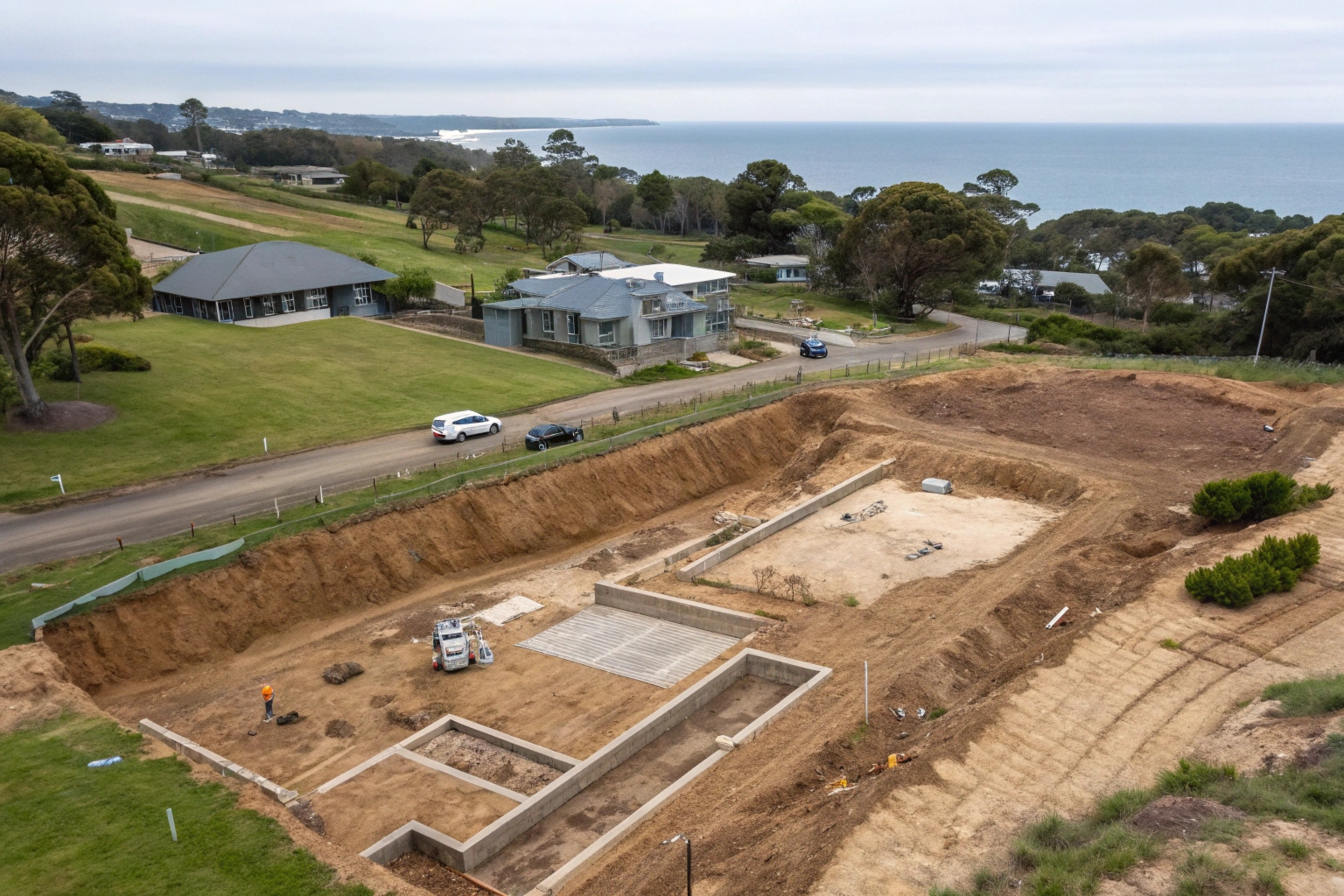
The ongoing greenfield development activity across the newer residential corridors of Casuarina, Kingscliff, and Pottsville generates consistent foundation excavation demand from builders working through staged land releases. We operate across these precincts regularly and understand the site conditions, certifier requirements, and construction program expectations that come with new estate work.
There’s no shortage of earthmoving operators in the Tweed region. But foundation excavation isn’t general earthmoving, and the difference between an operator who treats it that way and one who understands the structural consequences of getting it wrong shows up at inspection time — or worse, years later in the building above.
Here’s what you get when you work with us:
• Licensed and fully insured — foundation excavation operations covered for residential and commercial projects across both Queensland and New South Wales
• Precision set-out from engineering documentation — we work directly from your structural drawings and foundation layout, not approximations
• Pre-excavation service location as standard — no shortcuts on underground service identification before physical work begins
• Right equipment for every site — mini and compact excavators for restricted residential access, larger plant for new construction and commercial work
• Geotechnical awareness on every dig — continuous assessment of bearing conditions throughout excavation, not just mechanical depth compliance
• Experience across both QLD and NSW approval frameworks — we coordinate directly with certifiers and building surveyors on both sides of the border
• Free site assessment and quote — no obligation, no vague ballpark figures, just a clear assessment of your specific site and foundation excavation requirements
We service Tweed Heads, Banora Point, Coolangatta, Murwillumbah, Chinderah, Kingscliff, Casuarina, and surrounding areas across the full Tweed Shire construction catchment.
Foundation Excavation Tweed Heads — Frequently Asked Questions
It depends on the soil profile on your specific site. The structural engineer’s documentation specifies a minimum depth, but in practice the excavation goes to wherever adequate bearing material is confirmed — which in coastal sandy profiles near the shoreline can be deeper than the initial specification anticipates. We assess bearing conditions throughout the dig rather than just stopping at a nominated depth.
Yes. Foundation excavations are an inspectable stage under both Queensland and New South Wales building approval frameworks. The certifier or building surveyor must inspect and approve the excavated footings before reinforcement is placed and concrete is poured. We prepare every excavation to an inspection-ready standard and coordinate that inspection timing directly.
Yes. Step footing excavation on sloped sites is a standard part of what we do across the Tweed region. We handle the set-out, step dimensions, and cut face management that sloped site foundation excavation requires.
Every project gets proper underground service identification and marking before physical excavation begins. That’s non-negotiable on foundation work across established areas of Tweed Heads, Banora Point, and Coolangatta where underground infrastructure is dense.
Tweed Heads, Banora Point, Coolangatta, Murwillumbah, Chinderah, Kingscliff, Casuarina, Pottsville, and surrounding areas across the Tweed Shire.
Get a Free Site Assessment for Your Foundation Excavation in Tweed Heads
Foundation excavation is the stage where the structural quality of your building is either established correctly or compromised in ways that are difficult and expensive to fix later. It’s not the place to cut corners on operator experience, set-out precision, or bearing condition assessment — and it’s not the place to find out your excavation contractor doesn’t really understand the local soil conditions after the machine has already been on site.
We’ve been doing foundation excavation across Tweed Heads and the surrounding region long enough to know what the ground does here, what certifiers expect at inspection, and what it takes to keep a construction program moving through the foundation stage without delays or rectification surprises.
Whether you’re a homeowner building for the first time, an owner-builder managing your own project, or a builder running a tight construction program across multiple sites — we’re ready to come out, assess your site, and give you a clear, obligation-free quote based on your actual foundation excavation requirements.
We service Tweed Heads, Banora Point, Coolangatta, Murwillumbah, Chinderah, Kingscliff, Casuarina, Pottsville, and surrounding areas across the Tweed Shire.
Contact us today to book your free site assessment and foundation excavation quote. Get the groundwork right from the start — everything built above it depends on it.
Call us today or fill in the contact form and we’ll be in touch promptly.
