
Why Concrete Footpaths Are Built to Last in Tweed Heads Conditions
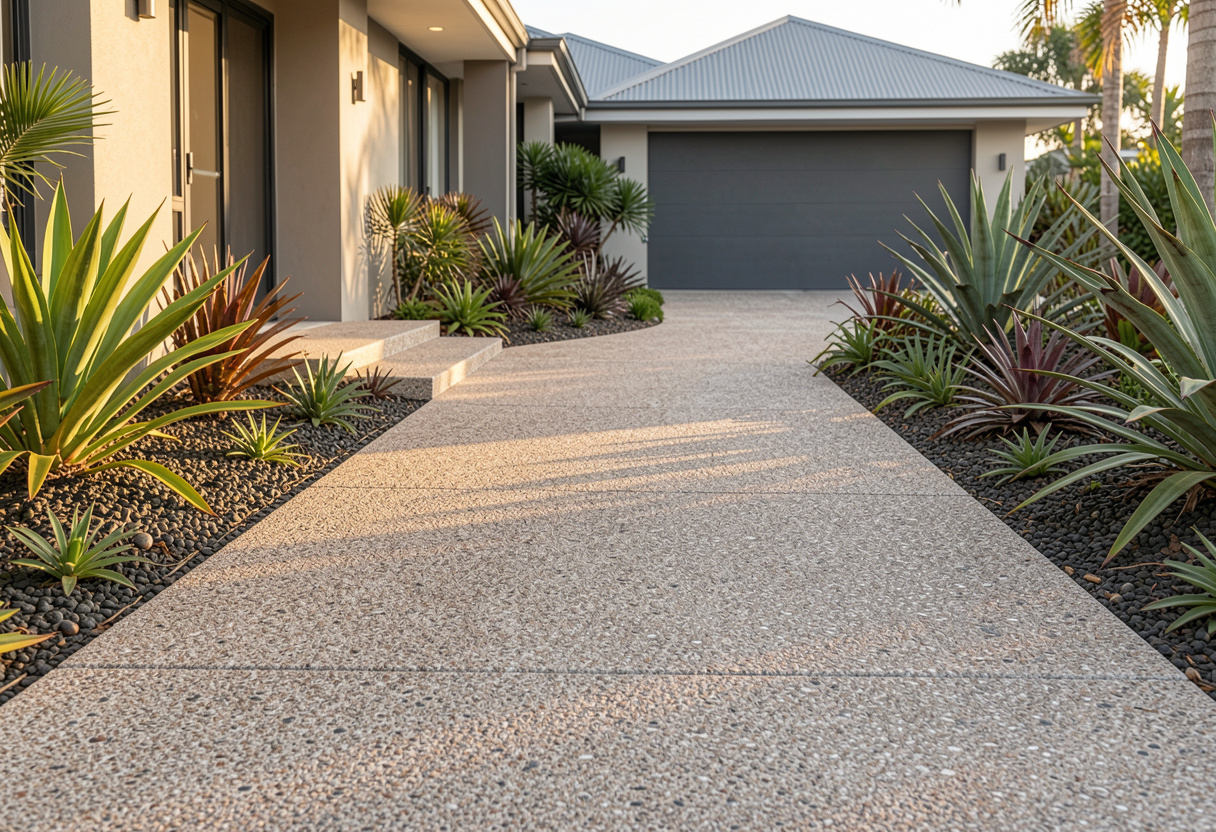
A concrete footpath might not be the flashiest part of a property — but ask anyone who’s watched a timber path rot through a Tweed summer, or seen pavers shift and pool water after a heavy downpour, and they’ll tell you it matters more than you’d think. Around Tweed Heads, the climate does a real number on outdoor surfaces. Intense UV, heavy subtropical rainfall, and that persistent coastal humidity put surfaces through cycles that chew through lesser materials fast.
Concrete is simply the right choice for this region. When it’s built properly, it drains correctly, holds its surface through the wet season, and stays safe underfoot year after year. We’re local concrete contractors serving Tweed Heads and the surrounding suburbs — handling everything from private residential pathways through to compliant commercial and civil footpath construction across the Tweed Shire area.

Residential Concrete Footpath Construction Across Tweed Heads Properties
Whether you’re connecting your driveway to a side gate, running a path from the front entry around to the back entertaining area, or replacing a crumbling old track that’s become a trip hazard — residential footpath work is something we do day in, day out across Tweed Heads and the suburbs surrounding it.
Commercial and Civil Concrete Footpath Construction in the Tweed Shire
Commercial and civil footpath work is a different beast from a residential garden path. The scope is bigger, the compliance requirements are tighter, and the consequences of getting it wrong are more serious — both for the people using the path and for the business or contractor responsible for it.
Licensed, Insured, and Built to Australian Standards — Get a Free Quote Today
When you’re having a concrete footpath built — whether it’s a straightforward residential path or a larger commercial project — you want to know the people doing it are licensed, insured, and know what they’re doing in this specific environment. That’s what we bring to every job across the Tweed Heads area.
We work to Australian Standards and Tweed Shire Council requirements on every project. We’ve done residential footpaths of every shape and configuration, and we’ve delivered commercial and civil footpath construction for facilities managers, developers, and local businesses across the region. No job is treated as a minor one — because a footpath that fails isn’t minor for the person who trips on it.
We offer a free measure and quote across our full service area, including Banora Point, Tweed Heads South, Coolangatta, Chinderah, Kingscliff, and Murwillumbah. Get in touch today to book your free quote — we’ll come out, assess the site properly, and give you a straight answer on what the job needs and what it’ll cost.
FAQs About Concrete Footpaths in Tweed Heads
How long does a concrete footpath last in the Tweed Heads area?
A properly built concrete footpath around Tweed Heads should give you 25 to 30 years without major issues — sometimes longer. The subtropical climate here does accelerate surface wear compared to cooler southern states, so sealing the surface every few years makes a real difference. What shortens a path’s life faster than anything is poor subbase prep at the start, which is why we don’t cut corners on that stage. Get the foundations right and the concrete looks after itself.
Do I need council approval for a footpath on my own property in Tweed Shire?
For a private footpath entirely within your own property boundary — connecting your driveway to a side gate, for example — you generally don’t need a council permit in Tweed Shire. Where it gets more complicated is if the path crosses the council verge or connects to a public footpath, which does require approval and has to meet council specs. I always recommend checking with Tweed Shire Council before starting, just so there are no surprises. We can help you work through that process if needed.
What's the best concrete finish for a footpath near a pool or in a wet area around Kingscliff or Casuarina?
In wet areas — especially around pools or in shaded spots that stay damp through the Tweed’s wet season — slip resistance is the priority. A broom finish is the practical go-to because the texture gives grip without needing any special treatment. Exposed aggregate is another solid option and it holds up well in coastal environments like Kingscliff and Casuarina where salt air can degrade smoother surfaces faster. I’d stay away from polished or smooth finishes in those spots — they look great until someone slips on them.
How wide should a residential footpath be on a Tweed Heads property?
For a standard residential path carrying foot traffic only, 900mm to 1.2 metres is generally the sweet spot — wide enough to walk comfortably, narrow enough to work within most side access corridors around Banora Point and Terranora blocks. If the path needs to handle wheelie bins, mobility aids, or occasional vehicle access, I’d push that out to 1.5 metres or wider. The block layout and access purpose really drive the decision, which is why I like to come out and look at the site before quoting rather than guessing off a plan.
Can tree roots damage a new concrete footpath on my Tweed Heads property?
Yes — and it’s one of the more common call-backs I see on older established properties across Tweed Heads South, Banora Point, and Murwillumbah where mature trees are part of the yard. Root intrusion gets under the slab, lifts sections unevenly, and creates lips that become trip hazards. The best way to manage it is to assess tree proximity at the planning stage and either use root barriers, adjust the path alignment, or account for deeper edge reinforcement. Ignoring it at the start means a rectification job later — which always costs more than doing it right the first time.
How long does it take for a new concrete footpath to be ready to walk on?
You can generally walk on a new concrete footpath after about 24 to 48 hours in normal conditions, but I always tell clients to give it a full 7 days before putting any real load on it. In Tweed Heads summers, the heat and humidity speed up the surface cure but the concrete still needs time to develop its full strength underneath. Avoid dragging furniture, heavy pots, or any sharp objects across it in those first few days — surface scratches during curing are the most common complaint I hear from homeowners who got impatient. Full structural strength is typically reached around the 28-day mark.
