
Concrete Demolition Done Right from Start to Finish
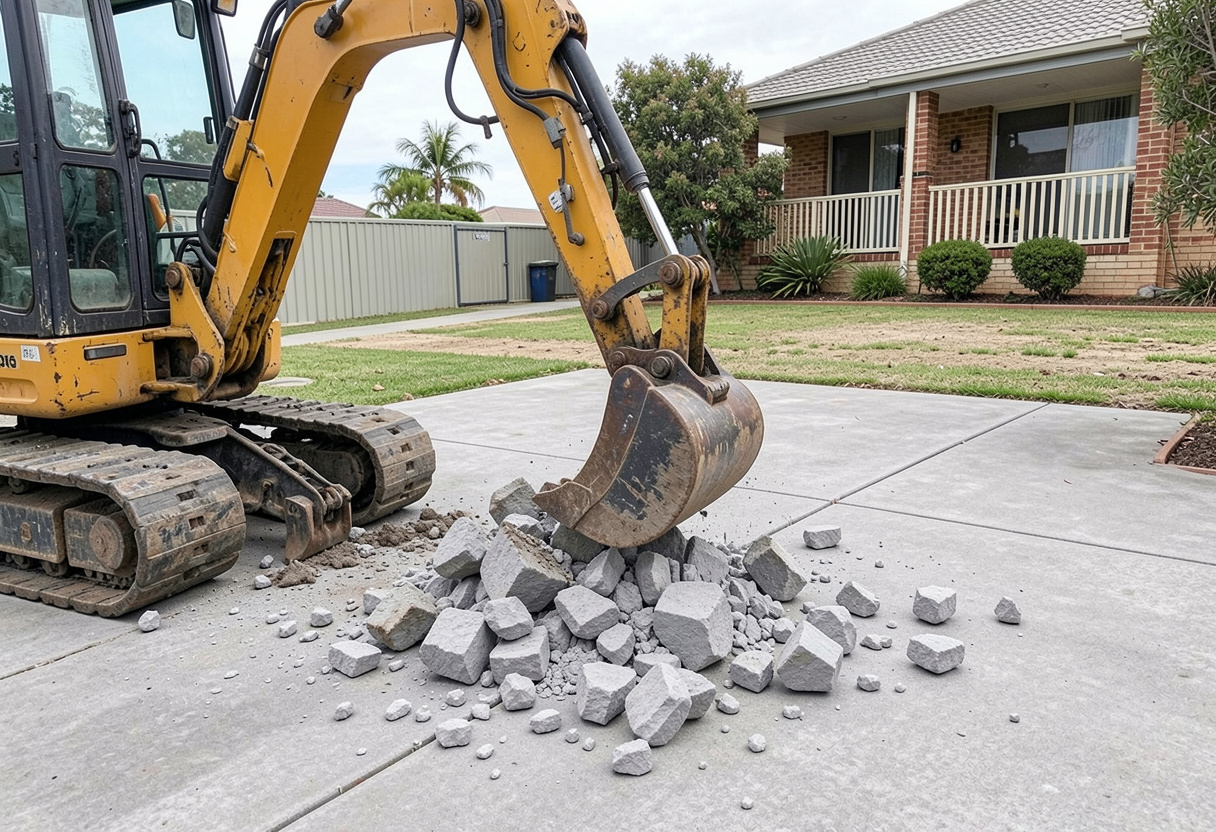
Most people think concrete demolition is just about hitting something hard until it breaks. It’s not. Done wrong, you’re looking at damaged underground services, cracked footings on structures you wanted to keep, and a site that’s actually harder to work with than before anyone swung a tool. Real concrete demolition — the kind that gets a site cleared properly and ready for whatever’s going in next — takes planning, the right gear, and someone who knows what they’re doing before the first break happens.
In Tweed Heads, that need is constant. The region’s older residential stock is full of concrete that’s had a rough time — salt air eating into reinforcement, subtropical wet seasons pushing moisture through slabs, UV doing its worst on unprotected surfaces year after year. When that concrete needs to come out, you want a local team who knows the area, knows the conditions, and handles everything from the first assessment through to final disposal.

What Good Concrete Demolition Actually Looks Like
Concrete Demolition Services Across Tweed Heads
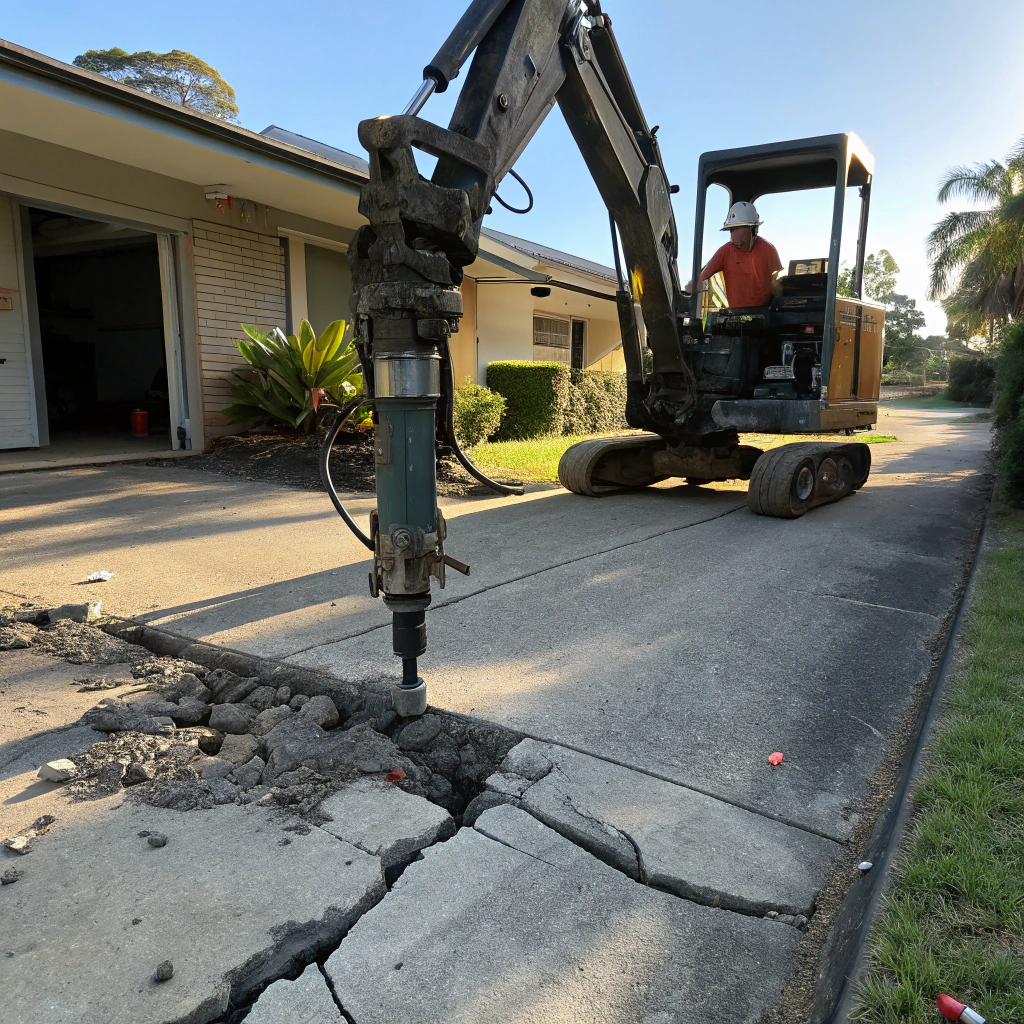
Servicing Tweed Heads and Surrounding Areas with Reliable Concrete Demolition
We service Tweed Heads, Banora Point, Tweed Heads South, Coolangatta, Chinderah, Kingscliff, and Murwillumbah. Residential or commercial, small access or large scale — we’ve handled it across this region and we know what local jobs actually involve.
Here’s what happens when you reach out:
- Free site assessment — we come out, look at the job properly, and identify anything that needs careful management before work begins
- Clear written quote — no vague estimates, no surprise costs when the job’s underway
- Fully licensed & insured — every demolition we carry out is covered, documented, and done to standard
- Responsible disposal — demolished concrete is sorted and recycled wherever possible, not just dumped
From Assessment to Action — Get Started Today
Whether you’re clearing an old driveway ahead of a new installation, pulling out a slab for a renovation, or demolishing a failing retaining wall that’s been a problem for years — the job starts with a conversation and a free site visit.
If you’ve got concrete that needs to come out — whether it’s a cracked old driveway, a slab ahead of a renovation, or a commercial hardstand heading for redevelopment — call us today or send through your details for a free quote. The next phase of your project starts with getting the existing concrete out properly, and that’s exactly what we do.
Call us today or fill out the quote form to get started. The sooner the concrete comes out, the sooner your project moves forward.
FAQs About Concrete Demolition in Tweed Heads
How long does a concrete demolition job typically take in Tweed Heads?
Most residential concrete demolition jobs in the Tweed Heads area — a driveway, a patio slab, a pool surround — get done in a single day. Larger commercial jobs or sites with tricky access might run two to three days depending on the volume of material coming out. The Tweed’s older residential stock in areas like Banora Point and Terranora often has thicker slabs than you’d expect, so I always factor that in during the site assessment. Getting the timeline right upfront means your renovation or build program doesn’t stall waiting for the demo to finish.
Do I need a council permit for concrete demolition in the Tweed Shire?
For most standard residential demolition work — driveways, garden slabs, pool surrounds — you generally don’t need a separate demolition permit in the Tweed Shire. That said, if the structure is load-bearing, attached to the dwelling, or part of a larger renovation requiring development approval, the picture changes. I always check the specific situation during the site assessment so nothing gets missed before we start breaking. Getting this wrong can hold up your whole project, and it’s an easy thing to sort out early.
Can you demolish concrete in a backyard with tight or restricted access?
Yes — restricted access is actually pretty common across the older residential suburbs around Tweed Heads, Coolangatta, and Tweed Heads South where lot layouts don’t always allow machinery through. In those situations I switch to manual breaking methods and smaller equipment to get the job done without damaging fences, garden beds, or other structures along the way. It takes longer than an open-access machine job, but the result is the same — concrete out, site clear, ready for the next phase. I’ll identify access constraints during the site visit and plan the method accordingly.
Is the demolished concrete just sent to landfill?
Not if I can help it. Clean concrete rubble is a recyclable material — it gets crushed and reused as road base and fill aggregate, which is a much better outcome than landfill. I sort demolished material on site and direct it to recycling facilities where it’s accepted. In a coastal region like Tweed Heads where development activity is ongoing, there’s solid local demand for recycled concrete aggregate, so the pathway usually works well.
Will concrete demolition damage my existing lawn, garden, or surrounding surfaces?
There’s always some disruption involved in demolition work — it’s not a surgical procedure. That said, I take care to protect surrounding surfaces, garden beds, and lawn areas as much as the job allows, using saw cutting to create clean separation lines where the demolition meets surfaces that are staying. In the Tweed’s subtropical climate, lawn recovers quickly once the work is done, which helps. I’ll walk the site with you before we start and flag anything that needs specific protection during the job.
How soon after demolition can new concrete be poured or construction start?
In most cases, the site is ready to go as soon as the demolished material is cleared — which happens the same day as the demolition itself. Subbase preparation, compaction, and any remediation work that’s needed gets scheduled right after the demo is complete. In the Tweed region, wet season timing matters — fresh subgrade exposed after demolition can soften quickly if heavy rain hits before the new work goes in, so I factor local conditions into the sequencing advice I give. Getting the demo and the new work scheduled close together is the smartest way to keep the project moving.
