
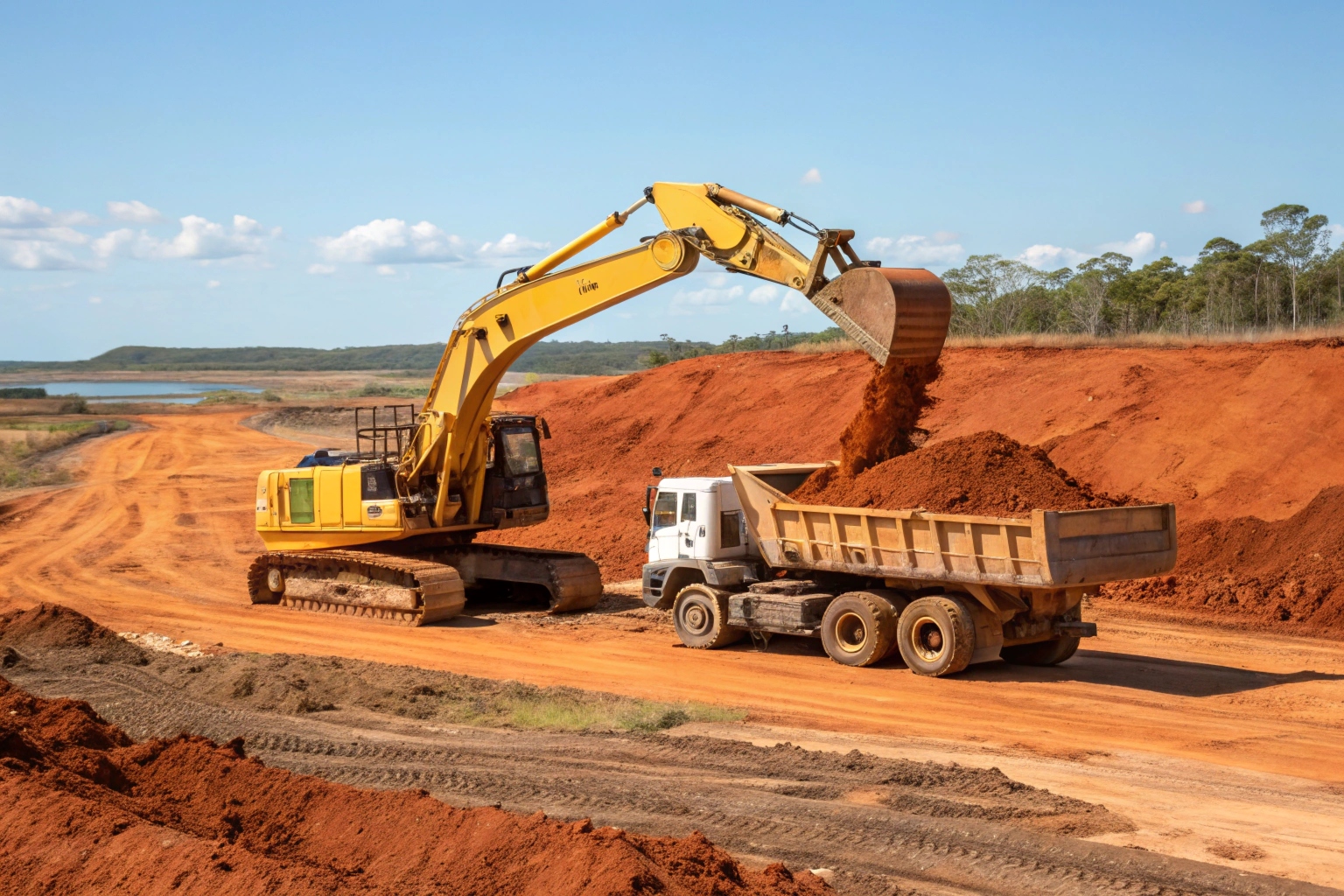
Planning, Set-Out & Pre-Excavation
Good bulk excavation starts well before the first bucket of material leaves the ground. The planning stage is where the efficiency of the entire program gets set — or lost.
It begins with the earthwork drawings and cut-and-fill calculations. Understanding the design platform levels, excavation extents, and net spoil volumes at the outset means we can mobilise the right equipment combination from day one, coordinate tipper truck movements to match excavation production rates, and programme spoil disposal logistics so the site stays clear and the work keeps moving without material bottlenecks building up behind the excavator.
Two non-negotiables before breaking ground:
• Pre-excavation service location across the full extent of the bulk excavation area. Bulk programs that hit unmarked underground services mid-operation create costly delays and serious safety incidents — both of which are entirely avoidable with thorough identification work upfront.
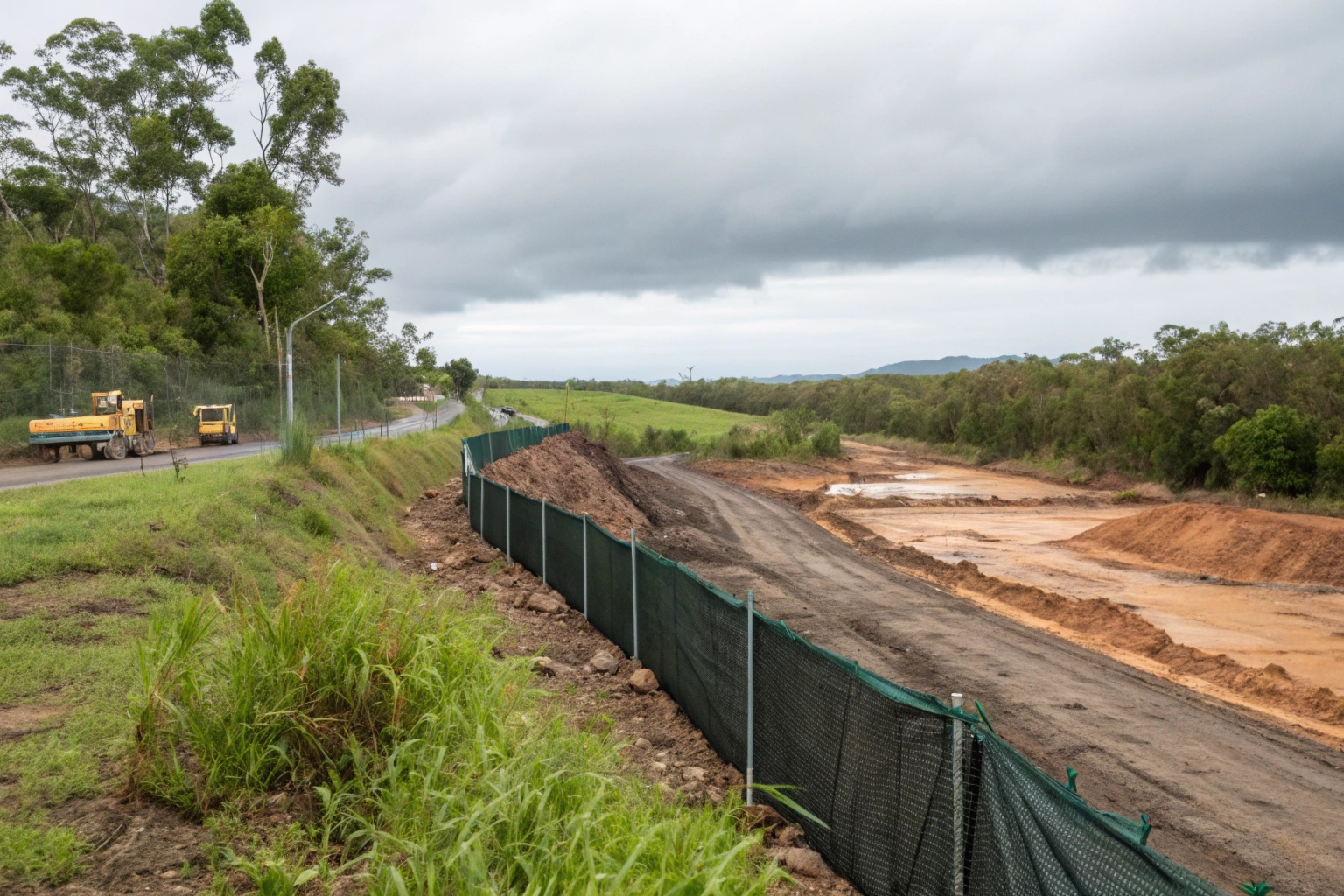
• Erosion and sediment control infrastructure. Silt fencing, sediment basins, stabilised construction entrances, topsoil stockpile management — all of this needs to be in place before excavation commences. The Tweed Heads coastal catchment sits within a sensitive environmental zone, and development approval conditions reflect that. Meeting those obligations isn’t a box-ticking exercise. It’s a genuine operational requirement that protects the site, the surrounding environment, and the project’s compliance standing throughout the earthwork program.
Getting this stage right is what separates a bulk excavation program that runs to schedule from one that’s constantly catching up.

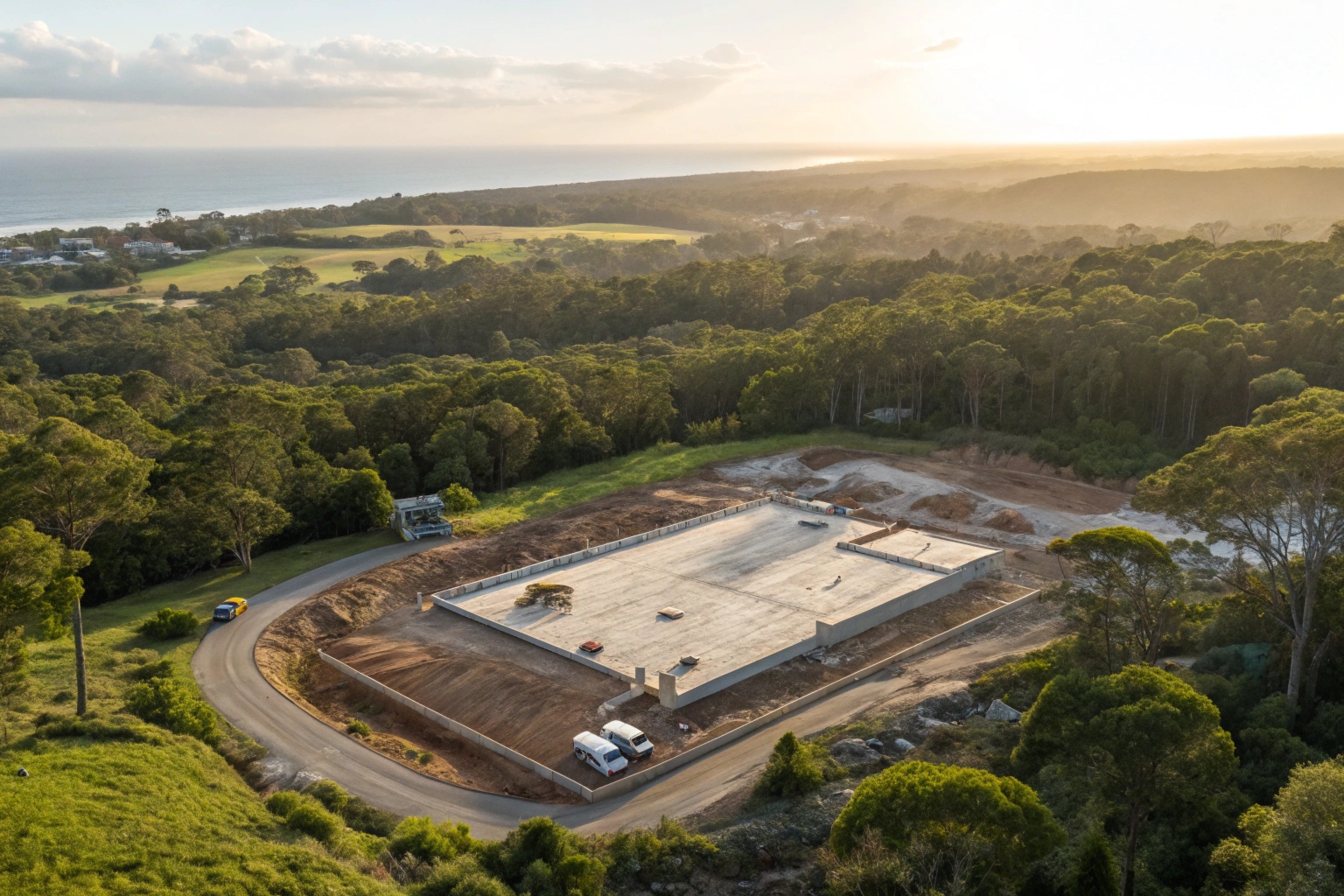
The Bulk Excavation Process – Equipment & Operations
Once the pre-excavation stage is locked in, the physical work begins — and how that work gets executed across the site determines whether the earthwork program delivers a finished platform the construction team can build from, or one that needs remediation before anything else can happen.
Our bulk excavation operations are built around a coordinated equipment approach:
Primary Excavation & Load-Out
Large excavator deployment as the primary production unit, supported by multiple tipper trucks sized to match excavator output and haul distance to the spoil disposal or reuse destination. Truck movements are coordinated to the excavation production rate — not the other way around. That distinction keeps the program moving.
Trim, Finish & Subgrade Preparation
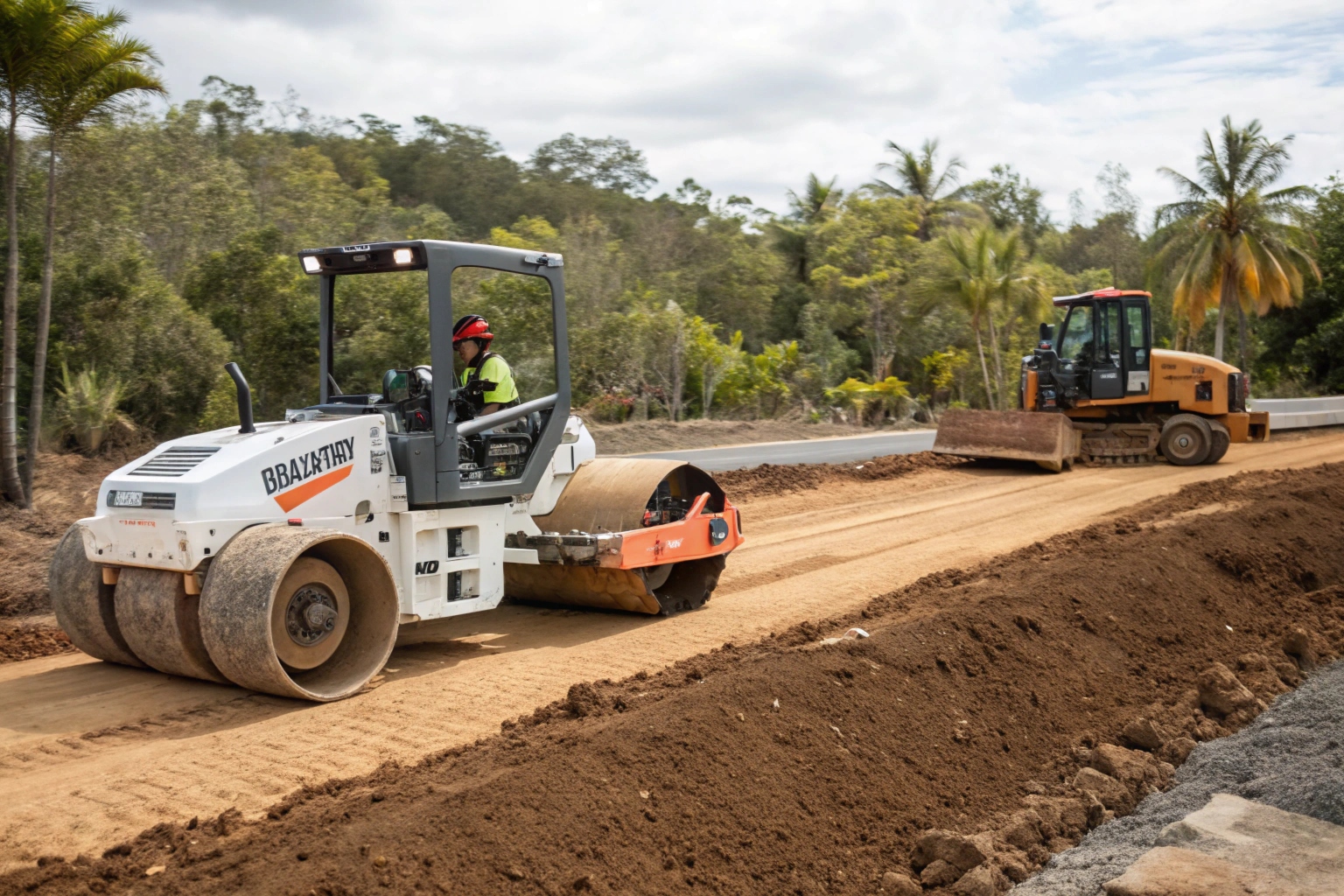
Bobcat and grader deployment for trim and finish earthworks that bring the excavated platform to design level and correct cross-fall across the full site extent. Compaction plant follows to achieve the specified bearing capacity for foundation and slab construction — because a bulk excavation that reaches design level but fails the geotechnical spec isn’t a finished bulk excavation.
Survey Control Throughout
Platform levels are monitored against design continuously across the program. Over-excavation and under-excavation areas get identified and addressed before they create downstream problems for the construction program that follows.
This isn’t a single-machine, single-operator approach. It’s a coordinated earthwork program — multiple machines, managed truck movements, weather-aware sequencing — delivered by a team that knows how to keep bulk excavation progressing when conditions on the ground aren’t cooperating.
Cut-and-Fill Balancing on Tweed Shire Development Sites
Many residential development sites across the Tweed Shire growth corridor aren’t flat. They come with meaningful topographic variation — rises, falls, cross-slopes — that require a cut-and-fill earthwork approach to create usable, level building platforms across the site.
The concept is straightforward enough: excavate the high points, place that material in the low points, and achieve a balanced earthwork outcome that minimises spoil export and eliminates the cost of importing fill from elsewhere. In practice, getting that balance right is where the discipline is.
What a well-executed cut-and-fill program requires:
Accurate Volume Calculation From the Outset
Earthwork design and cut-and-fill calculations need to be accurate before the program starts — not estimated on the fly as the excavation progresses. Getting the numbers right upfront determines whether the balance actually works or whether you’re scrambling for spoil disposal or fill sources mid-program.
Disciplined Execution in the Field
Material needs to be placed in fill areas at the correct compaction standard — not just pushed into position and left. Every lift, compacted and tested against the geotechnical specification, so the finished fill platform carries the foundation and slab loads it’s designed to carry.
Compaction Testing & Documentation
Fill placement that isn’t tested and documented isn’t fill placement that a certifier or structural engineer will sign off on. We coordinate compaction testing throughout the fill program and maintain the documentation trail that the construction program downstream depends on.
For development sites across Banora Point, Casuarina, Kingscliff, and the broader Murwillumbah corridor — where lot topography varies considerably — this is standard operational territory for us.
Wet Season Bulk Excavation in the Tweed Heads Climate
The Tweed Heads subtropical climate is one of the genuine operational realities of bulk earthmoving in this region — and it’s one that catches operators who aren’t prepared for it.
The wet season here isn’t a gentle backdrop. Concentrated summer rainfall delivering significant daily totals across short periods is a normal feature of the local climate, not an exception. For bulk excavation programs that aren’t planned with weather awareness built into the earthwork methodology from the start, that rainfall creates real problems.
What wet weather does to an unmanaged bulk excavation site:
• Excavated material becomes saturated, difficult to handle, and unworkable for compaction in fill areas
• Exposed subgrade platforms that take a heavy rainfall event without drainage planning can be significantly set back by erosion and surface water ponding
• Remediation work — re-trimming, drying out, re-compacting — eats directly into the earthwork program before construction can proceed
How we manage it:
Drainage Planning Built Into the Methodology
Maintaining fall across the excavated platform toward temporary drainage outlets isn’t something we add when the weather turns. It’s designed into the excavation sequence from the outset.
Subgrade Protection After Trim and Compaction
Finished subgrade areas get protected promptly after trim and compaction — not left exposed while the next phase is organised.
Sequencing to Minimise Exposed Disturbed Ground
The bulk excavation program is sequenced to limit the area of disturbed, unprotected ground during high rainfall periods — reducing both the erosion risk and the remediation exposure if a significant rainfall event arrives mid-program.
This is standard operational approach here, not a reactive scramble when the sky opens up.
Bulk Excavation Across All Project Types
The Tweed Heads development market generates bulk excavation demand across a wide range of project types — and the operational requirements shift meaningfully between them. A single residential lot in Casuarina has different logistics, timeline pressures, and documentation requirements than a multi-unit development in Kingscliff or a commercial construction site near Tweed Heads CBD. We work across all of them.
Residential Development & Single Lot Projects
New home sites, knockdown rebuilds, and owner-builder lots across the Tweed Shire growth corridor. For homeowners and owner-builders commissioning bulk excavation for the first time, we walk through the process clearly — what the earthwork program involves, what the site will look like at each stage, and what gets handed over at completion.
Multi-Unit & Residential Estate Development
Developers and project managers running medium-to-large residential estate programs need bulk excavation executed to programme discipline — on schedule, coordinated with other trades, and compliant with the environmental and geotechnical documentation requirements that multi-lot development approvals carry.
Commercial & Infrastructure Projects
Commercial construction sites and infrastructure projects across the broader Tweed Shire area demand equipment capability, site management capacity, and the ability to work within construction programme constraints that don’t move around the earthwork contractor’s schedule.
Across all three — the approach is the same. Right equipment for the project scale, coordinated operations, environmental compliance, and a finished bulk excavation outcome the construction program can build from without remediation or delay.
Why Tweed Heads Builders & Developers Choose Us
There’s no shortage of excavation contractors operating across the Tweed Heads region. The difference that matters on a bulk excavation project isn’t who has the biggest machine — it’s who has the local ground knowledge, the programme discipline, and the operational coordination to execute a large-scale earthmoving program without creating problems for the construction team that follows.
Here’s what we bring to every bulk excavation project across the region:
Local Ground Knowledge That Comes From Experience
The soil variability across the Tweed Heads coastal corridor — from sandy coastal profiles near Kingscliff and Casuarina through to the heavier clay-bearing material toward Murwillumbah — isn’t something you learn from a spec sheet. It’s something you learn from working the ground repeatedly across different sites and conditions. That knowledge shapes how we plan equipment selection, haul logistics, and compaction methodology on every project.
Programme Discipline That Protects Your Construction Schedule
Bulk excavation that runs over time doesn’t just cost money on the earthwork contract — it compresses every trade that follows. We plan the program to run on schedule, manage the variables that threaten it, and communicate clearly when ground conditions or weather require a programme adjustment.
Environmental Compliance as Standard Practice
The Tweed Heads coastal catchment carries real environmental obligations for disturbed ground. Pre-excavation service location, erosion and sediment control infrastructure, and environmental documentation aren’t add-ons here — they’re built into every program from day one.
Serving Banora Point, Coolangatta, Chinderah, Murwillumbah, Kingscliff, Casuarina, and across the broader Tweed Shire development corridor.
Frequently Asked Questions – Bulk Excavation Tweed Heads
Bulk excavation pricing depends on several variables — the volume of material being moved, site access conditions, haul distance to spoil disposal, ground conditions encountered during excavation, and the level of subgrade preparation required at completion. A site with easy access, consistent sandy soil, and a short haul to disposal will price differently to a clay-heavy site with restricted access and significant cut-and-fill balancing required. The most accurate way to get a number is a free site assessment — we look at the actual conditions, review the earthwork drawings where available, and provide a quote based on what the project actually involves.
Program duration depends on the volume of material, equipment combination deployed, site access for truck movements, and weather conditions across the excavation period. Residential single-lot bulk excavation programs typically complete within a few days to a week. Larger residential estate and commercial programs run to a project-specific schedule developed at the planning stage.
Yes — erosion and sediment control infrastructure installation is part of our pre-excavation setup on every project. Silt fencing, sediment basins, stabilised construction entrances, and topsoil stockpile management are in place before bulk excavation commences.
Yes. Wet season bulk excavation is managed with drainage planning, subgrade protection, and excavation sequencing built into the methodology from the start — not treated as a problem to deal with after rainfall arrives.
Yes — compaction testing and documentation are coordinated throughout any cut-and-fill program to meet the geotechnical specification required for the construction that follows.
Get a Free Quote for Your Bulk Excavation Project
If you’ve got a bulk excavation project coming up across the Tweed Heads region — whether it’s a single residential lot, a multi-unit development, a commercial construction site, or an infrastructure project across the broader Tweed Shire growth corridor — we’re ready to assess the site and provide a detailed, no-obligation quote based on what the project actually involves.
What you get when you contact us:
• Free site assessment and quote for all bulk excavation enquiries
• Earthwork program planning based on your construction schedule requirements
• Pre-excavation service location and erosion and sediment control compliance as standard
• Coordinated equipment deployment — excavators, tipper trucks, compaction plant, survey control
• Cut-and-fill program management and compaction testing coordination where required
• Licensed and fully insured bulk excavation operations across all project types and scales
• Local ground knowledge built from consistent operation across the Tweed Heads coastal development corridor
We work across Tweed Heads, Banora Point, Coolangatta, Chinderah, Kingscliff, Casuarina, Murwillumbah, and throughout the broader Tweed Shire development catchment.
Don’t leave your earthwork program to a contractor who’s going to figure out the local conditions as they go. Get a team that’s already worked the ground across this region, knows what to expect, and has the equipment and programme discipline to deliver a bulk excavation outcome your construction program can build from — on schedule, on spec, and without surprises.
Call us today or fill out the contact form for your free bulk excavation quote.
