
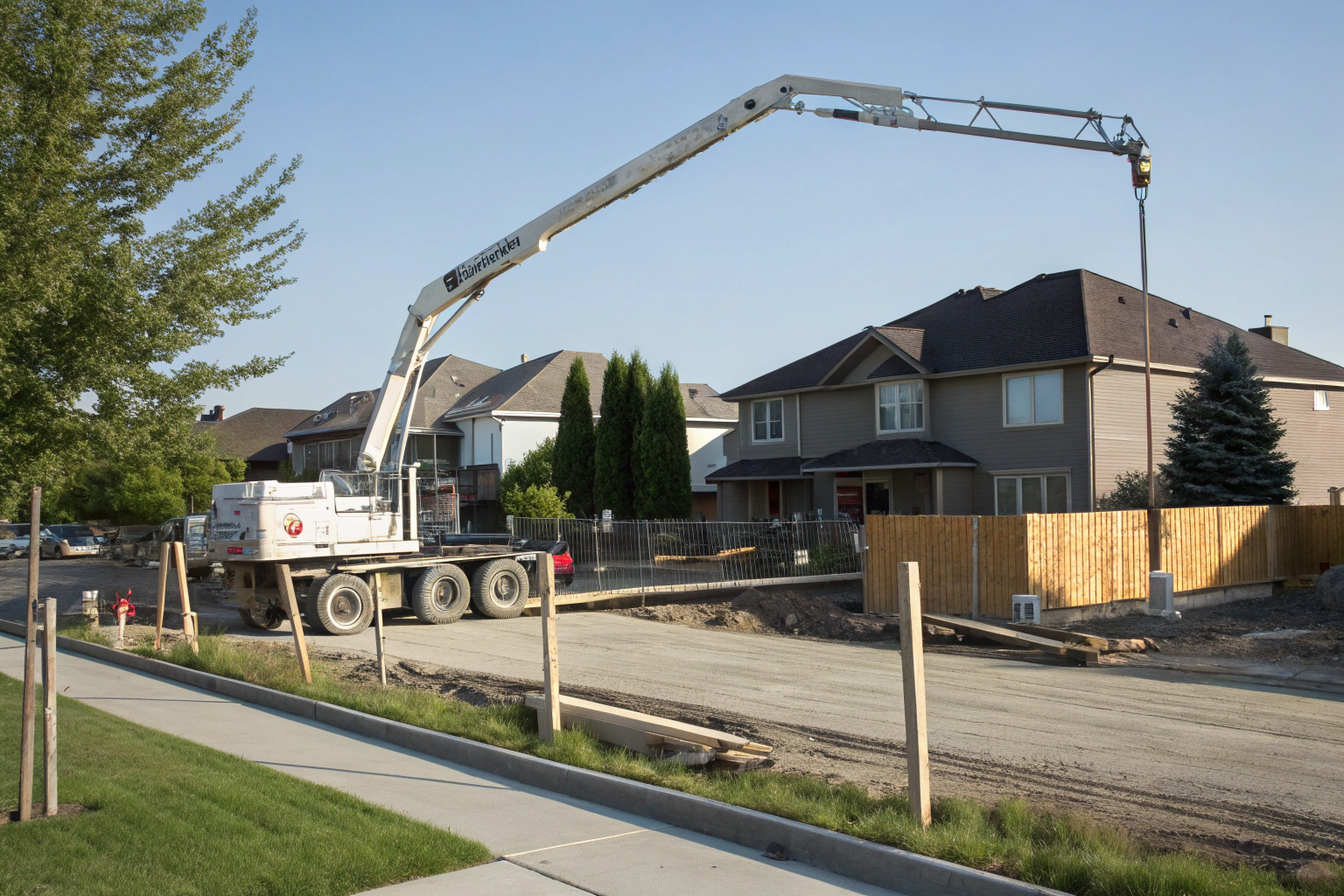
What Goes Into Specifying the Right Ready Mix Concrete for Your Pour
Ready mix concrete specification isn’t a single number — it’s a combination of interdependent variables that together determine whether the concrete placed on your site performs the way the application requires. Strength grade is the most visible specification, but it’s only the starting point. The exposure classification assigned to your project under AS 3600 and AS 1379 governs the minimum cement content, maximum water-cement ratio, and cover requirements that protect embedded reinforcement from the environmental conditions your structure will face over its service life.
Aggregate size influences how the concrete flows through formwork and around reinforcement. Slump determines how workable the mix is on site without compromising the water-cement ratio that controls strength and durability. Cement content affects both early strength gain and long-term durability performance in ways that matter particularly in the coastal subtropical environment of Tweed Heads.
These variables interact — adjusting one affects the others. A supplier who works through the full specification picture with you before the order is placed delivers a product genuinely matched to your pour, your site, and the local conditions on the day.

Ready Mix Concrete Orders – Getting the Spec Right Before the Truck Rolls
Ready mix concrete supply starts well before the truck leaves the batch plant. Every pour has a specification — the strength grade required by the engineering documentation or building code, the exposure classification that determines minimum cement content and maximum water-cement ratio to protect embedded reinforcement in the Tweed Coast’s corrosive coastal environment, and the aggregate size appropriate to the pour geometry and reinforcement spacing on site.
Workability and slump specification matter just as much as strength. A mix with the correct slump allows proper placement and consolidation without the temptation to add excess water on site — a shortcut that compromises both strength and long-term durability. Where the application demands it, we specify admixtures including reduced shrinkage additives for large slabs, retarders for hot day pours where extended working time is needed, and accelerated set options for wet weather placements.
We engage with these specification questions at the ordering stage rather than supplying a generic mix regardless of the application. Getting the spec right before the truck rolls is what separates a pour that finishes well from one that doesn’t.

Delivery Scheduling That Matches Your Pour Rate – Not Just a Truck on a Timetable
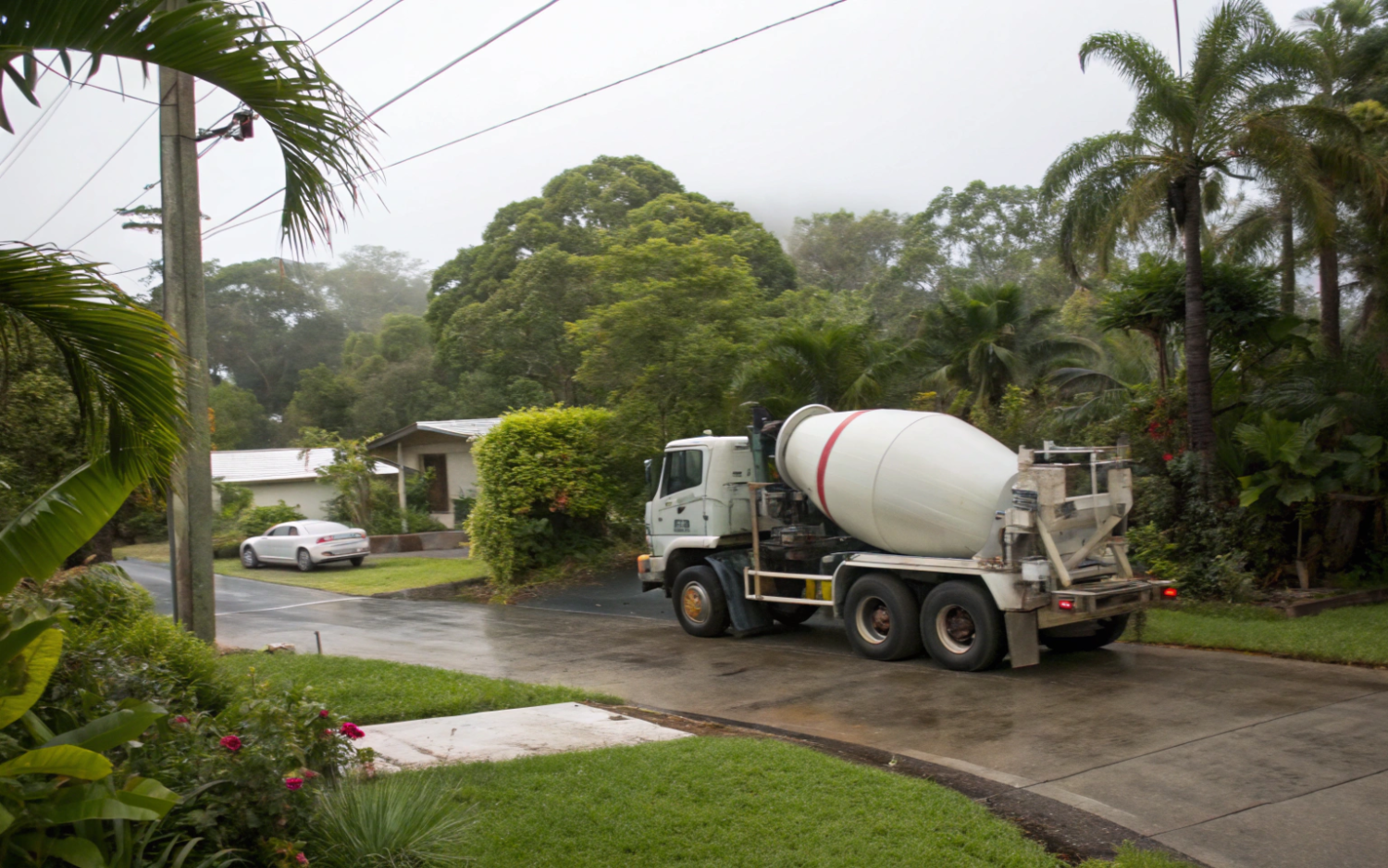
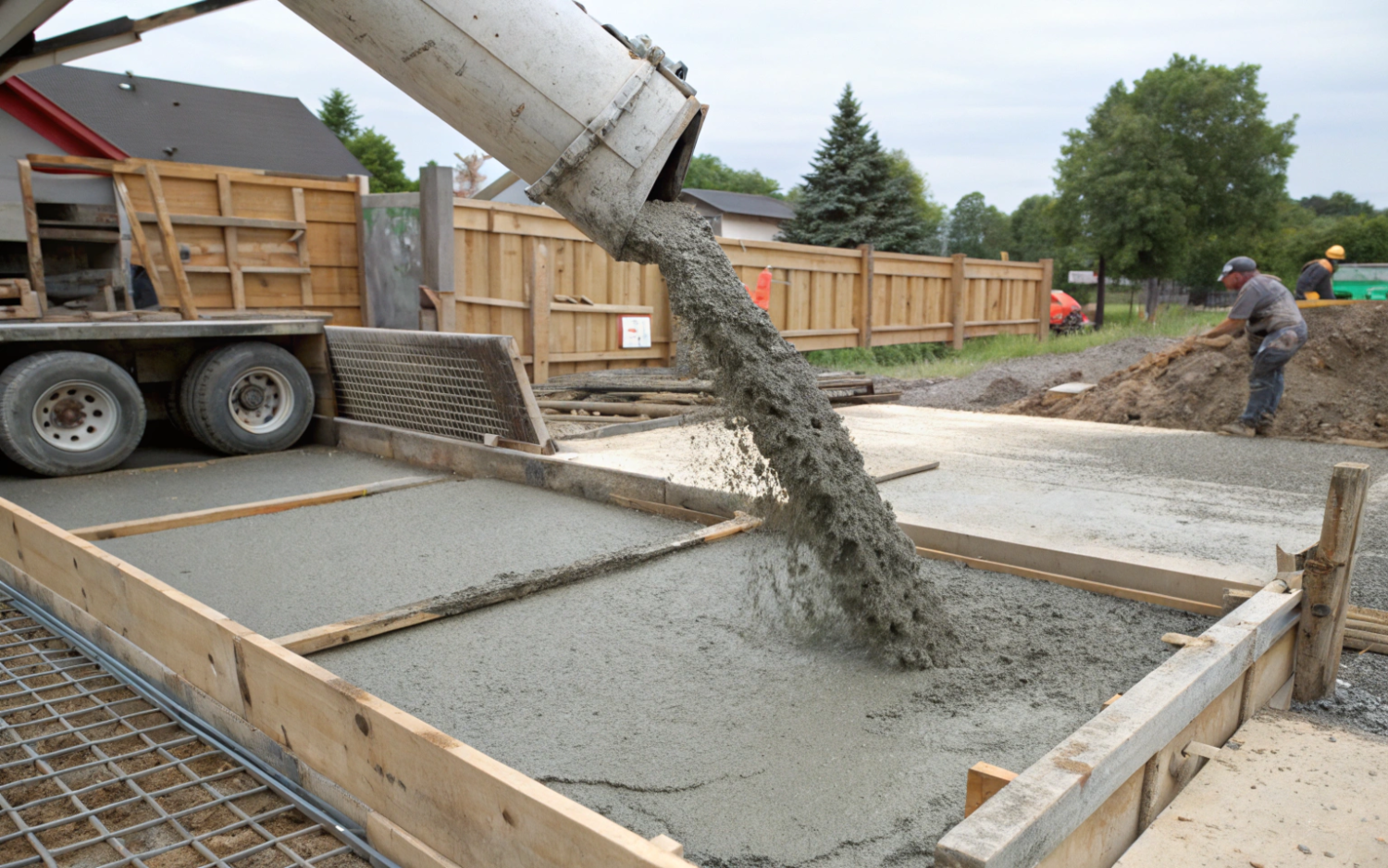
Delivery scheduling is where ready-mix concrete supply either supports the pour or works against it. Trucks arriving too quickly stack concrete in drums beyond the optimal placement window. Gaps between deliveries stall the pour and create cold joints in slabs and walls that compromise structural integrity — a problem no amount of finishing work can fix after the fact.
We schedule truck arrival intervals around the pour rate your placing crew can maintain, not around what’s convenient for dispatch. Throughout the pour, communication between the batch plant and site allows schedule adjustments, additional orders, and mix changes that respond to actual conditions on the day rather than assumptions made the evening before. That coordination is what keeps a pour running clean from the first truck to the last.
Coastal & Subtropical Mix Specifications for the Tweed Heads Region
Coastal and subtropical conditions place demands on concrete mix specification that standard temperate-climate mixes aren’t designed to meet. In the Tweed Heads region, two environmental factors drive mix specification decisions that suppliers without genuine local knowledge routinely underestimate.
The first is marine exposure. Properties within the coastal influence zone — beachfront residential, estuarine, and waterfront commercial sites along the Tweed River and Pacific coastline — require mixes specified to elevated exposure classifications under AS 3600 and AS 1379. Higher cement content, reduced water-cement ratios, and appropriate chloride resistance are non-negotiable where saltwater influence and coastal air accelerate reinforcement corrosion.
The second is subtropical temperature and humidity. Warm ambient conditions reduce slump retention and accelerate strength gain compared to the standard mix behaviours modelled for temperate Australian climates. A summer morning pour in Tweed Heads requires a different approach to mix design and delivery scheduling than the same structural application would in Sydney or Melbourne — and we spec accordingly.
Mix Design, Strength Grades & Exposure Classifications Explained
Mix design is the recipe that determines how ready mix concrete performs — the proportions of cement, aggregate, water, and admixtures that together produce the strength, workability, and durability characteristics the application requires. Strength grade is expressed in megapascals — N20, N25, N32, N40 — and represents the characteristic compressive strength at 28 days. Residential slabs and footpaths typically specify N25 or N32. Structural elements, commercial floors, and coastal applications often require N32 to N40, depending on the exposure classification and engineering specification.
Exposure classifications under AS 3600 and AS 1379 range from A1 for benign interior environments through to C and U classifications for severe marine and aggressive chemical exposure. In the Tweed Heads region, properties within marine influence zones — beachfront, estuarine, and tidal areas along the Tweed River and Pacific coastline — attract elevated exposure classifications that require higher cement content, lower water-cement ratios, and increased cover to reinforcement.
Understanding where your project sits across both the strength and exposure dimensions is what drives the right mix specification — and the right mix is what delivers a structure that performs across its full design life.

| Residential Ready Mix Concrete Supply | Commercial Ready Mix Concrete Supply |
|---|---|
| Residential ready mix concrete supply across Tweed Heads covers driveways, patio slabs, shed bases, pool surrounds, and footpaths — single-truck and part-load orders where accurate volume calculation, correct mix specification, and on-time delivery matter as much as on any commercial site. A homeowner having a driveway poured deserves the same specification attentiveness and delivery reliability as a builder pouring a structural floor slab. | Commercial ready mix concrete supply across the Tweed region demands multi-truck coordination, consistent batching across the full delivery sequence, and delivery scheduling matched precisely to the pour rate that the placing crew can maintain. From warehouse floors and commercial slabs to structural elements and civil infrastructure, we manage supply logistics from the first truck to the last — keeping the pour moving and the specification consistent throughout. |
Consistent Batching Across Every Truck – Why It Matters for Your Finished Surface
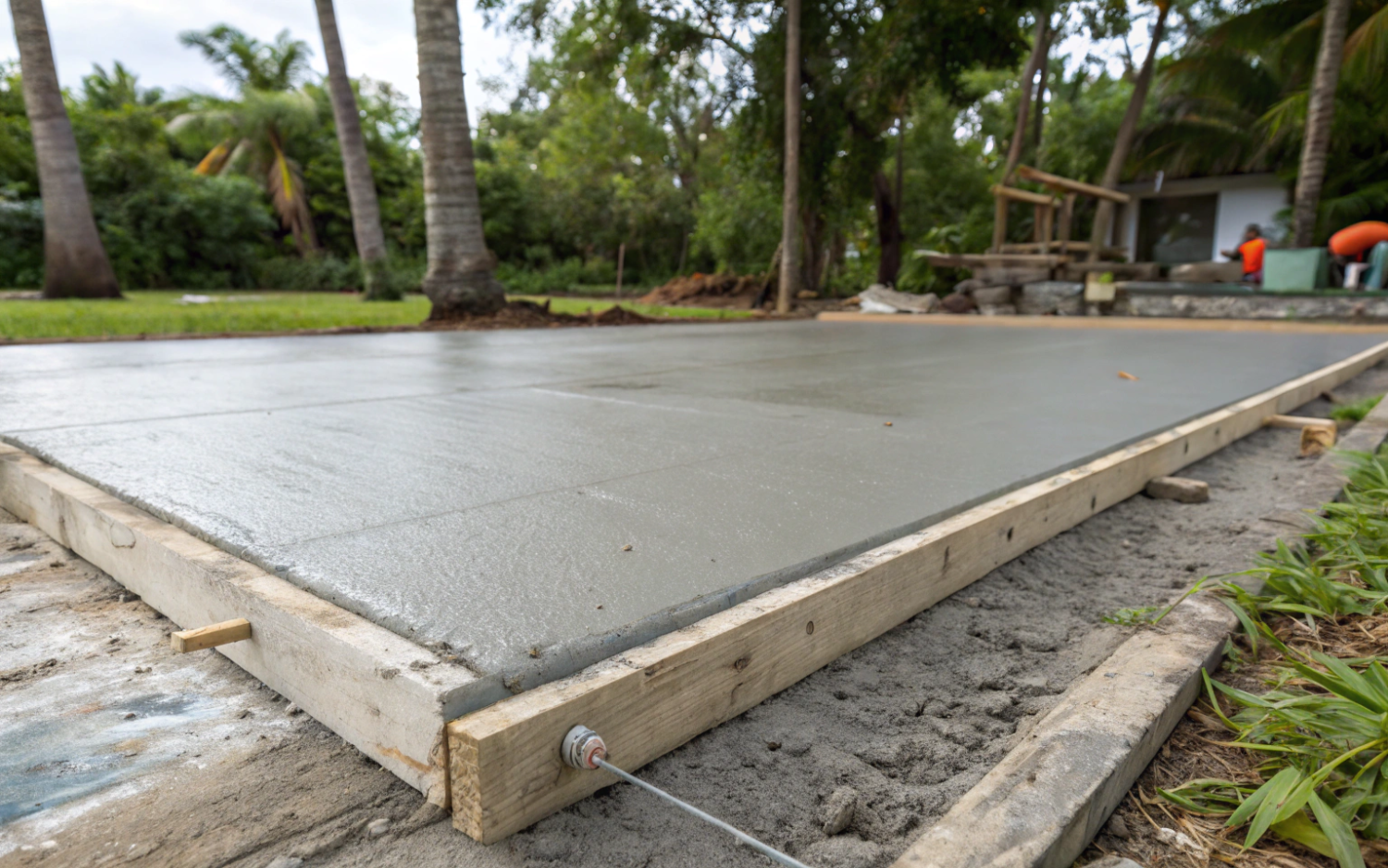
Consistent batching across every truck in a multi-delivery pour is one of the most overlooked dimensions of ready mix concrete supply — and one of the most visible when it goes wrong. Variation in cement content, water-cement ratio, or aggregate grading between successive loads produces concrete that behaves differently at the point of placement, creating finishing challenges that show up immediately and surface defects that become permanent once the concrete sets.
The consequences of inconsistent batching include:
- Colour variation across the finished slab surface — particularly visible in plain and coloured concrete finishes
- Workability differences between loads that force the finishing crew to adjust technique mid-pour
- Strength variation across sections of the same structural element
- Surface texture inconsistency that affects both appearance and functional performance
We batch to a consistent specification across every truck in the delivery sequence — same cement content, same aggregate grading, same admixture dosage, same target slump. For large multi-truck pours across Tweed Heads residential and commercial sites, that consistency is what allows the concreter to work the surface uniformly and deliver a finished result that looks and performs the same from one end of the slab to the other.
FAQ: Ready Mix Concrete Supply Tweed Heads
Most residential driveways in the Tweed Heads region specify N25 or N32 concrete. N32 is recommended for driveways with regular vehicle traffic or those within coastal exposure zones where durability demands are higher than standard residential applications.
Calculate the volume in cubic metres by multiplying the length, width, and depth of the pour. We recommend adding a 5–10% allowance for waste, variation in substrate depth, and spillage. We assist with volume calculations at the ordering stage.
Minimum order quantities vary, and part-load charges apply to small volume orders below the truck’s full capacity. Contact us at the quoting stage to discuss your pour volume — we’ll advise on the most cost-effective supply approach for your project.
Booking lead times vary with seasonal demand and batch plant scheduling. For residential pours, 2–5 business days’ notice is typically sufficient. Larger commercial pours with specific delivery windows and multi-truck scheduling benefit from earlier booking to secure the required delivery sequence.
A cold joint forms when a gap between truck deliveries allows previously placed concrete to begin setting before the next load is placed against it. Matching truck arrival intervals to your pour rate prevents gaps that create structural weak points in slabs and walls.
Ready Mix Concrete Supply Across Tweed Heads & Surrounding Suburbs
Ready mix concrete supply across Tweed Heads and the surrounding region — Banora Point, Coolangatta, Kingscliff, Chinderah, Casuarina, and Murwillumbah. We supply quality batched concrete to Australian Standards with experienced mix specification advice for every residential and commercial application in the local coastal environment.
From a single residential truck load to large multi-truck commercial pours, we bring the delivery reliability, specification knowledge, and consistent batching that every successful pour depends on. Get in touch today for a supply quote or mix specification discussion — we’ll make sure the right concrete arrives at your site, on time, ready to pour.
