
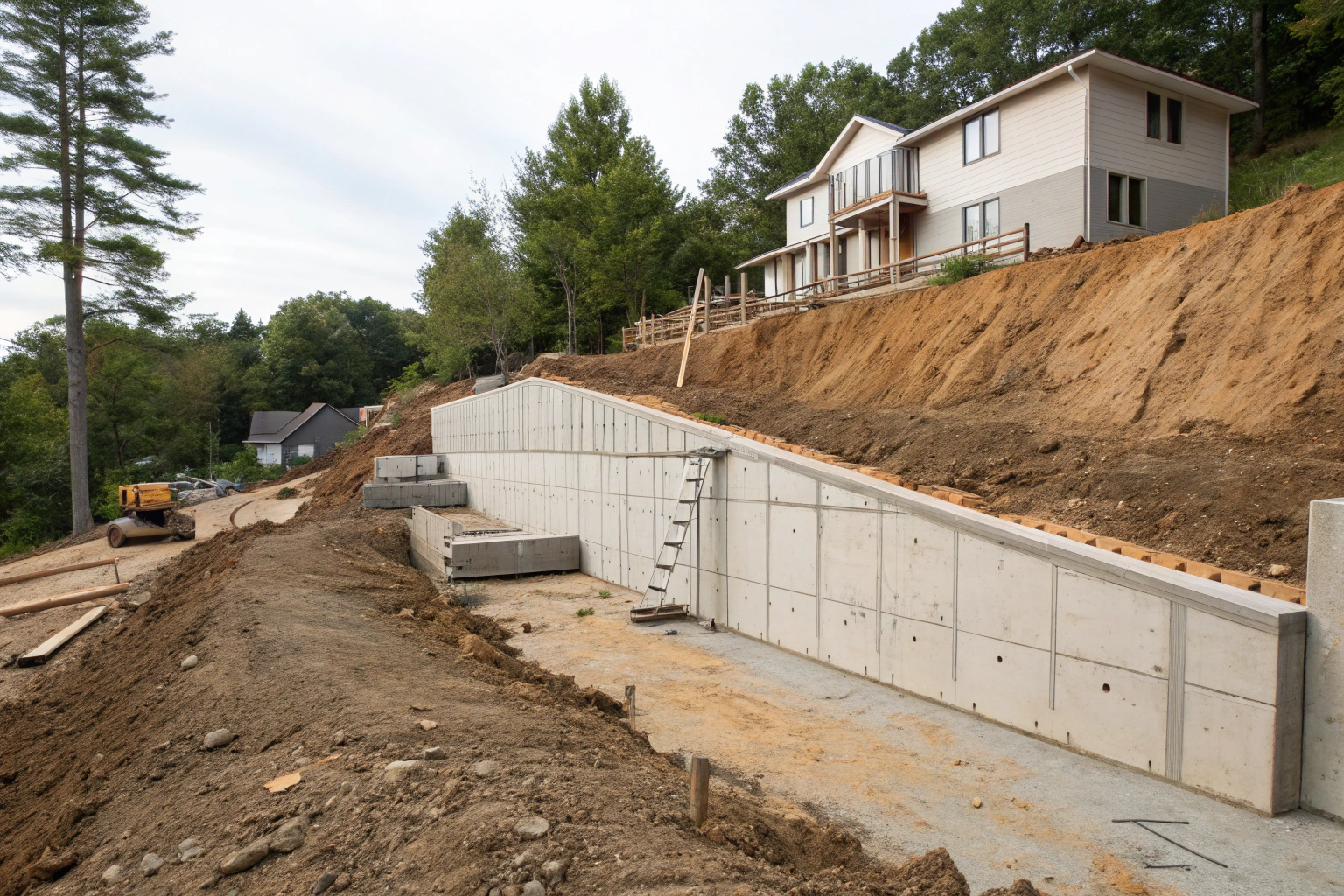
What Site Preparation Actually Involves
Site preparation is the complete enabling process that precedes construction — not a single operation but a structured sequence of earthwork, clearing, drainage, and subgrade work that must be executed in the correct order to produce a finished site condition that meets the geotechnical, drainage, and level requirements of the construction documentation. Every stage builds on the one before it, and the quality of each stage directly determines the performance of everything built on top of it.
The scope covers vegetation clearing, topsoil stripping, cut-and-fill earthwork, compaction of fill layers, subgrade proof rolling, import of engineered fill where required, surface drainage grading, erosion and sediment control infrastructure, underground service identification, and establishment of a stable construction access route. Each of these operations has a specific place in the sequence and a specific standard it must meet before the next stage proceeds.
A site that has been thoroughly prepared — cleared, levelled, compacted, graded, and documented — gives the entire construction program a platform to operate from with confidence. A site that hasn’t created problems that compound through every trade and every stage that follows.

Clearing & Stripping — Starting With a Clean Footprint
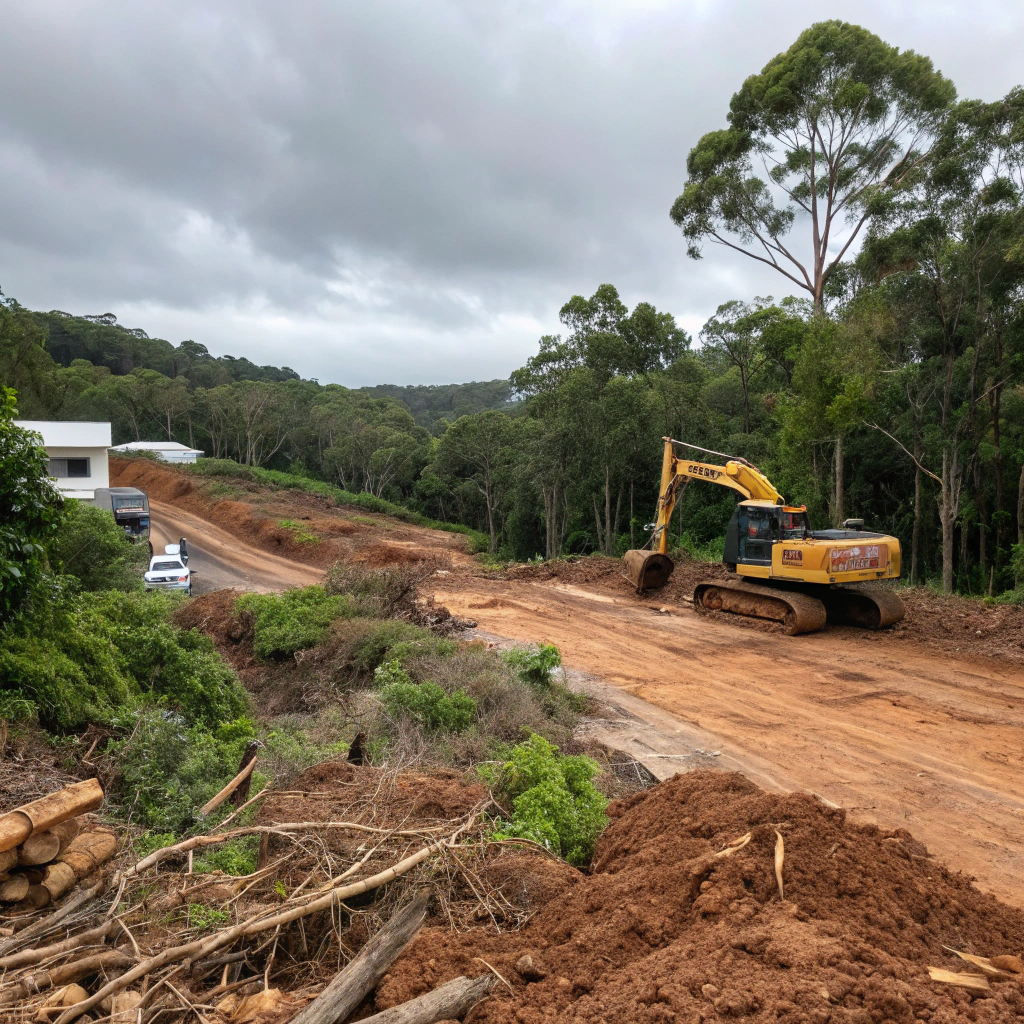
Clearing and stripping is where site preparation begins — and in the Tweed Heads region, it’s a stage that demands more than running a machine across the surface. The subtropical growth environment here produces vigorous root systems in established trees and shrubs that go deep. Leave them in place beneath a construction footprint and you’re creating organic decomposition voids in the subgrade that will cause movement and settlement long after the slab is poured.
Our clearing scope covers full vegetation removal across the construction footprint — trees, shrubs, and ground cover — followed by thorough grubbing of root systems and organic material that would compromise subgrade integrity if left behind. Topsoil is stripped and stockpiled for reuse in landscaping and garden areas after construction, keeping usable material on site. Existing structures, concrete slabs, and hardstand within the footprint are demolished and removed before earthwork commences.
Where sites sit adjacent to remnant vegetation corridors — common across Tweed Heads and surrounds — we manage clearing boundaries carefully, fully clearing the construction footprint while protecting retained vegetation outside it.
Subgrade Compaction — The Stage That Prevents Slab Failures
Subgrade compaction is the quality assurance step that separates a construction-ready platform from a surface that looks prepared but isn’t. Inadequate compaction is the single most common cause of slab cracking and footing settlement in new residential construction across the Tweed Heads market — and it’s entirely preventable when this stage is executed properly and documented to the standard the construction program requires.
Fill material is placed and compacted in controlled layers using appropriate compaction plant for the material type and site conditions. Each layer is compacted to the geotechnical specification before the next is placed — there are no shortcuts in this sequence without creating the exact subgrade conditions that produce movement under construction loads. Subgrade proof rolling is carried out across the prepared platform to identify soft spots and areas of inadequate bearing capacity that require treatment before building work commences.
Where the development approval or the certifier requires it, we coordinate compaction testing with a geotechnical consultant and provide the documentation needed to satisfy certification requirements before slab and footing construction proceeds. Getting this stage right — and being able to prove it — keeps the construction program moving without holdups at the inspection and approval stage.
Cut and Fill Earthwork to Design Platform Levels
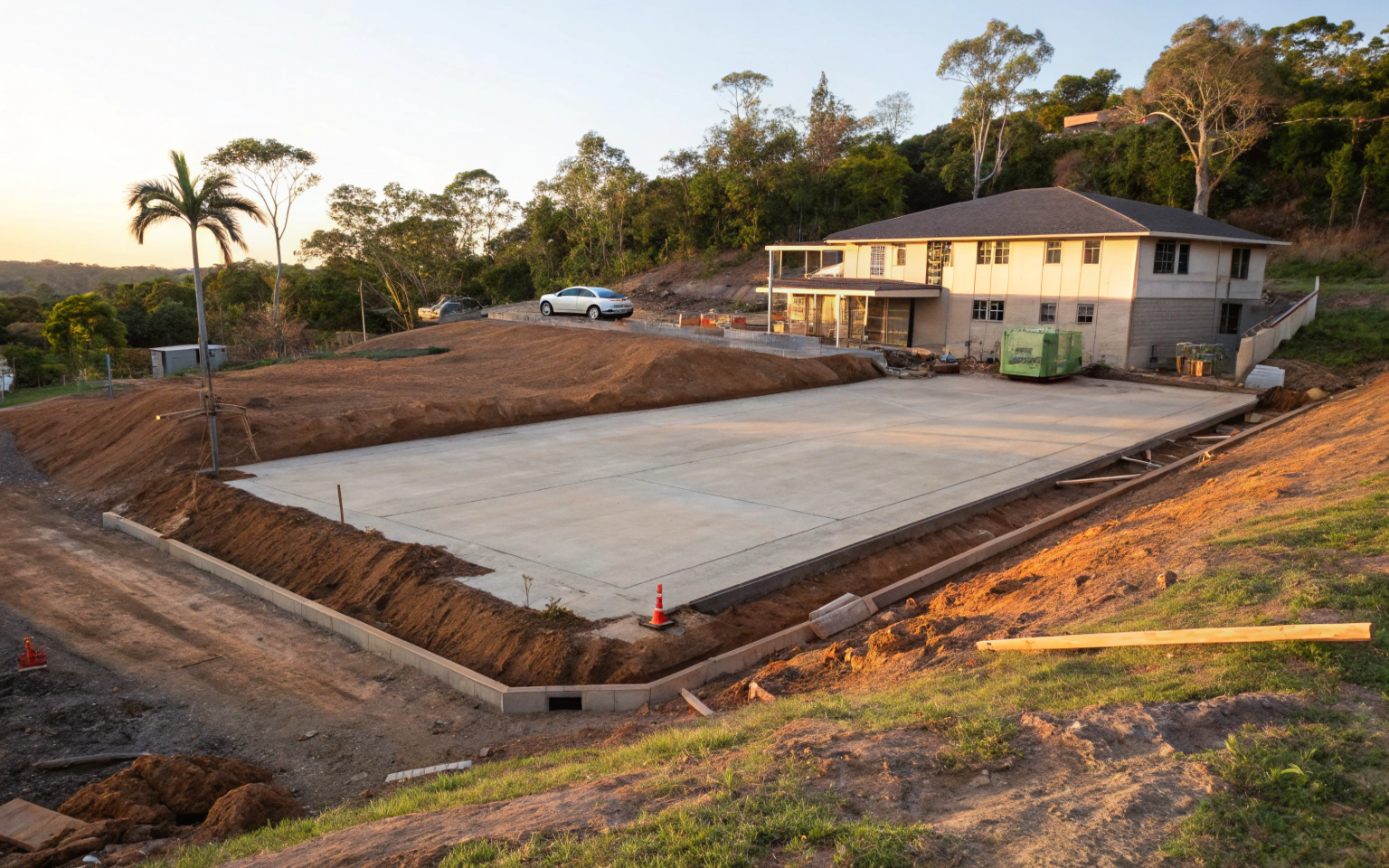
Cut and fill earthwork brings the site from its existing ground condition to the design platform levels and cross-falls specified in the construction documentation. Material excavated from high points across the site is redistributed to low points, reducing the volume of import and export required and keeping the earthwork program as efficient as the site conditions allow.
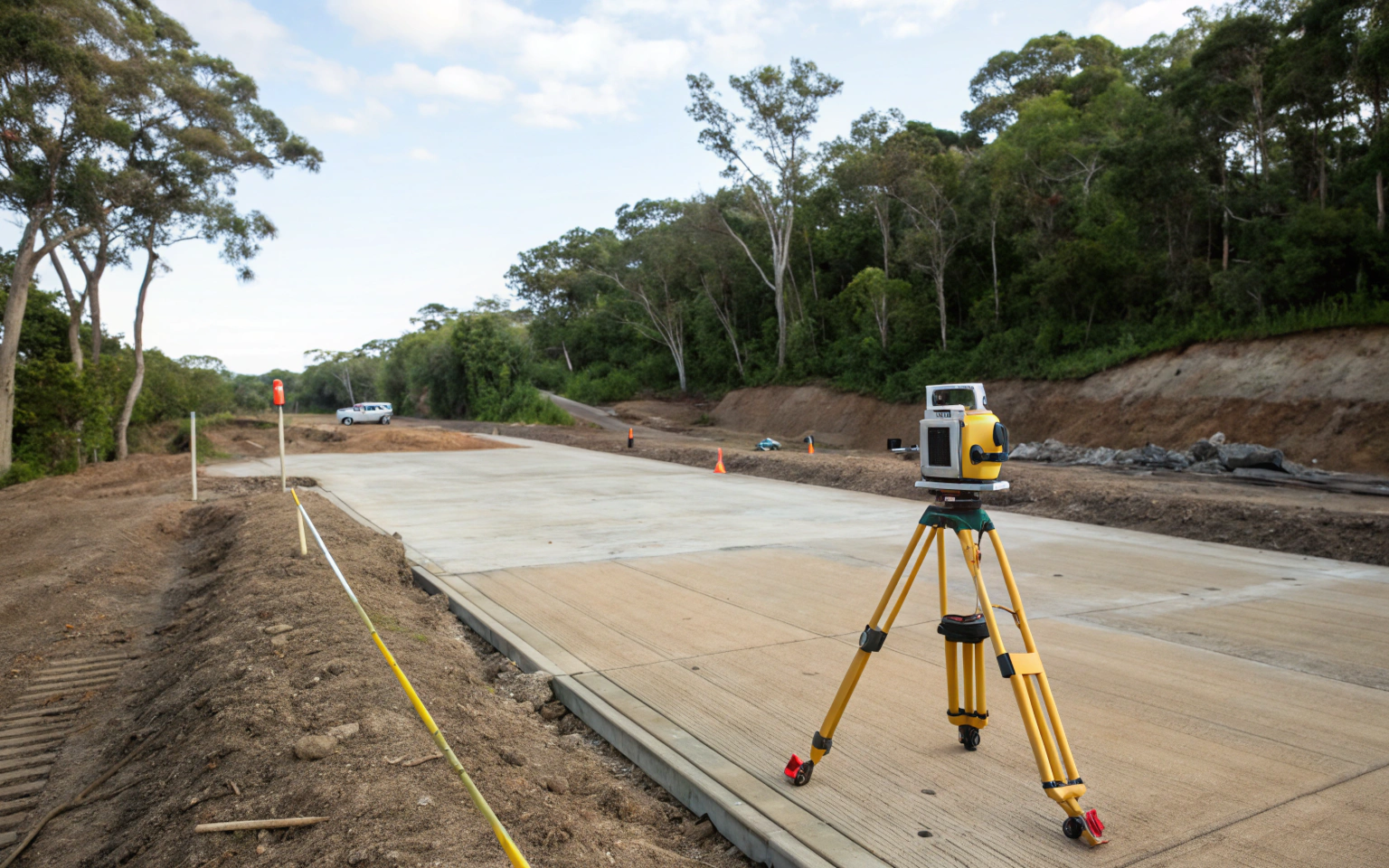
We work to the design levels and tolerances set out in the construction documentation, with survey verification of finished platform levels before the next stage of site preparation proceeds. Where existing site material is unsuitable for use as structural fill — due to high organic content, excessive clay plasticity, or other geotechnical limitations — engineered fill is imported and placed in compacted layers to the specification required beneath building platforms and concrete slabs.
Cross-falls are established across the prepared platform to align with the surface drainage design, directing stormwater away from building areas from the moment earthwork is complete rather than waiting for permanent drainage infrastructure to be installed later in the construction program.
Erosion & Sediment Control Across Tweed Shire and Gold Coast Sites
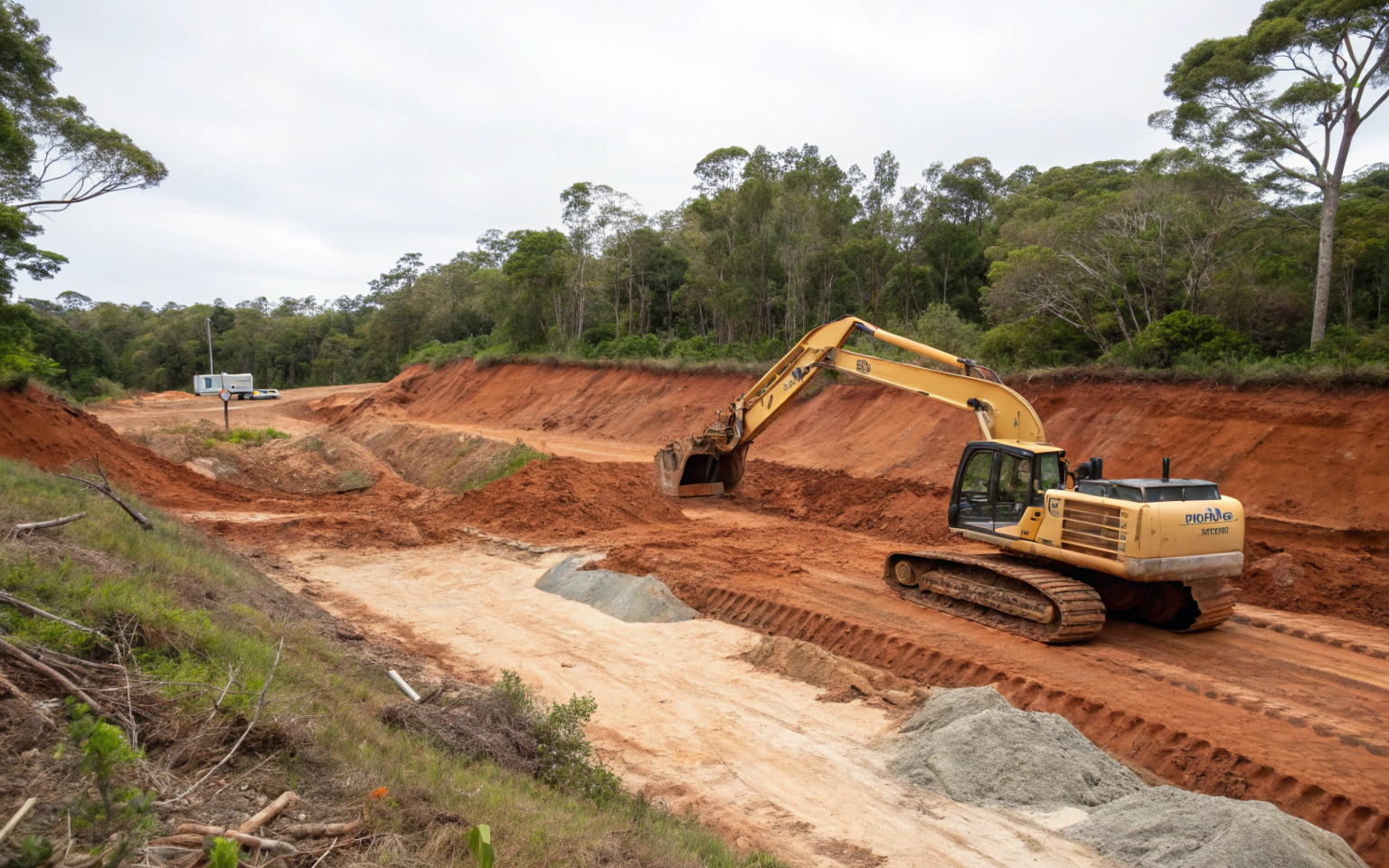
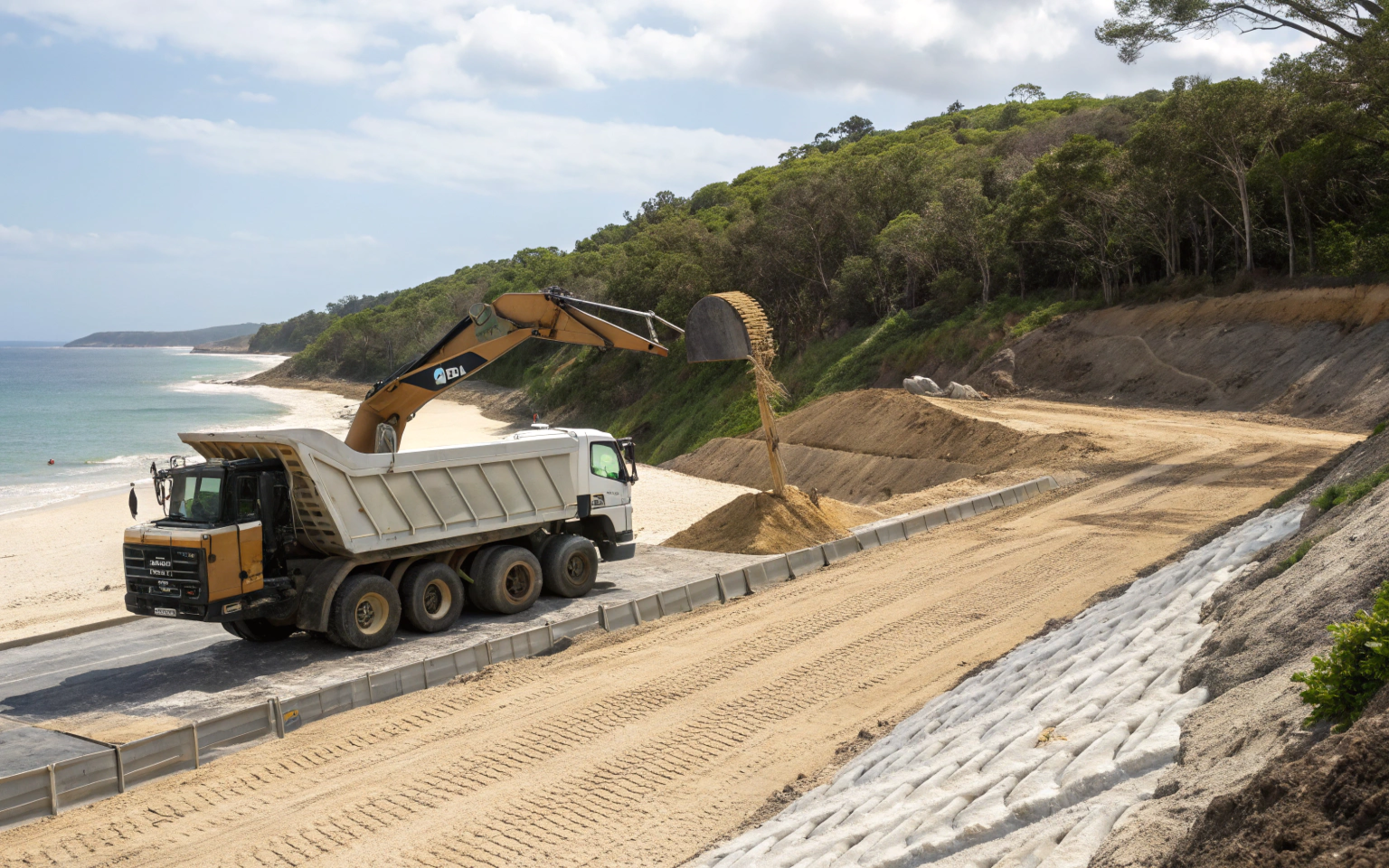
Erosion and sediment control is a development approval condition, not an optional extra — and in the Tweed Heads catchment, where disturbed construction sites sit in close proximity to coastal waterways, the Tweed River floodplain, and sensitive riparian environments, council compliance expectations are applied seriously and inspected regularly.
We install the full range of sediment control infrastructure required under both Tweed Shire Council and Gold Coast City Council frameworks — silt fencing around the perimeter of disturbed areas, sediment basins where site runoff volumes require them, and stabilised construction entrances that prevent tracked sediment from leaving the site onto public roads. This infrastructure is established at the site preparation stage and maintained throughout the construction program.
Our erosion and sediment control plans are prepared to meet the specific conditions of the development approval, accounting for the site’s catchment area, slope, proximity to waterways, and the volume of disturbed ground generated by the site preparation scope. Sites near the Tweed River corridor and low-lying coastal areas around Kingscliff and Chinderah receive particular attention given the environmental sensitivity of those receiving environments and the enforcement activity that reflects it.
| Site Preparation for New Home Construction Across the Tweed Region | Site Preparation for Multi-Lot Development and Commercial Projects |
|---|---|
| New home construction across Banora Point, Casuarina, Kingscliff, and Pottsville generates consistent site preparation demand from owner-builders and project builders working through the Tweed Shire and Gold Coast City Council approval frameworks. We manage the full site preparation scope — clearing, earthwork, compaction, drainage grading, and sediment control — coordinated to the construction program timeline and certification requirements so the build can proceed without delays at the slab and footing stage. | Multi-lot residential developments and commercial construction projects across the Tweed Heads growth corridor require site preparation at a scale and complexity that demands proper sequencing, equipment capacity, and compliance documentation across a larger disturbed footprint. We manage bulk earthwork, platform preparation across multiple building envelopes, shared drainage infrastructure, and erosion control across the full development site — keeping the program on schedule and meeting the approval conditions that apply to larger-scale earthwork operations in this jurisdiction. |
Underground Service Identification Before Construction Commences
Underground service identification across the full construction footprint is a non-negotiable step in the site preparation sequence — and one that’s skipped or rushed on sites where the consequences show up later as damaged infrastructure, construction delays, and liability exposure that was entirely avoidable.
Before excavation and earthwork activities commence, we identify and mark the location of all underground services across the site. This gives the construction program a clear picture of existing infrastructure that must be protected throughout every subsequent stage of ground disturbance.
Services identified and marked as part of our site preparation scope include:
- Electrical cables — both overhead and underground supply infrastructure
- Water supply mains and service connections to existing structures
- Sewer and stormwater lines crossing or adjacent to the construction footprint
- Gas infrastructure where reticulated supply exists in the surrounding network
- Telecommunications conduits including NBN and legacy Telstra infrastructure
Across the established residential areas of Banora Point, Coolangatta, and Murwillumbah, underground service networks are dense and not always accurately reflected in existing authority records. Our identification process accounts for this — combining dial-before-you-dig documentation with on-ground verification across the footprint before machine work begins.
Frequently Asked Questions
Site preparation for a new home build covers vegetation clearing, topsoil stripping, cut-and-fill earthwork to design levels, subgrade compaction, surface drainage grading, erosion and sediment control installation, and underground service identification — all completed before slab and footing construction commences.
A standard residential block typically requires two to five days of site preparation depending on site size, existing vegetation, earthwork volumes, and ground conditions. Sites with significant cut-and-fill requirements or difficult access may require additional time to complete properly.
Most site preparation and earthwork activities are covered under your development approval conditions. Tweed Shire Council imposes specific requirements around erosion and sediment control, vegetation clearing, and acid sulfate soil management that must be addressed before and during site preparation operations.
Subgrade compaction is the controlled compression of fill material in layers to a specified bearing capacity before construction loads are applied. Inadequate compaction is the primary cause of slab cracking and footing settlement in new residential construction — proper compaction prevents these outcomes entirely.
Yes. Development approval conditions in both Tweed Shire Council and Gold Coast City Council jurisdictions require erosion and sediment control infrastructure on all disturbed construction sites. This includes silt fencing, stabilised construction entrances, and sediment basins where required by the site’s catchment and drainage conditions.
Get a Free Site Assessment and Quote for Your Tweed Heads Project
Site preparation done properly is the difference between a construction program that runs to schedule and one that absorbs time and cost fixing problems that were preventable at the ground level. We deliver licensed, insured site preparation across Tweed Heads, Banora Point, Coolangatta, Kingscliff, Chinderah, Casuarina, and Murwillumbah — with the local knowledge, equipment range, and compliance experience the Tweed Heads construction market demands.
Whether you’re an owner-builder managing your first new home build, a project builder working through a residential program, or a developer preparing a multi-lot site, contact us today for a free site assessment and quote. We’ll assess your site conditions, review your documentation, and give you a clear picture of what your site preparation scope involves before construction commences.
